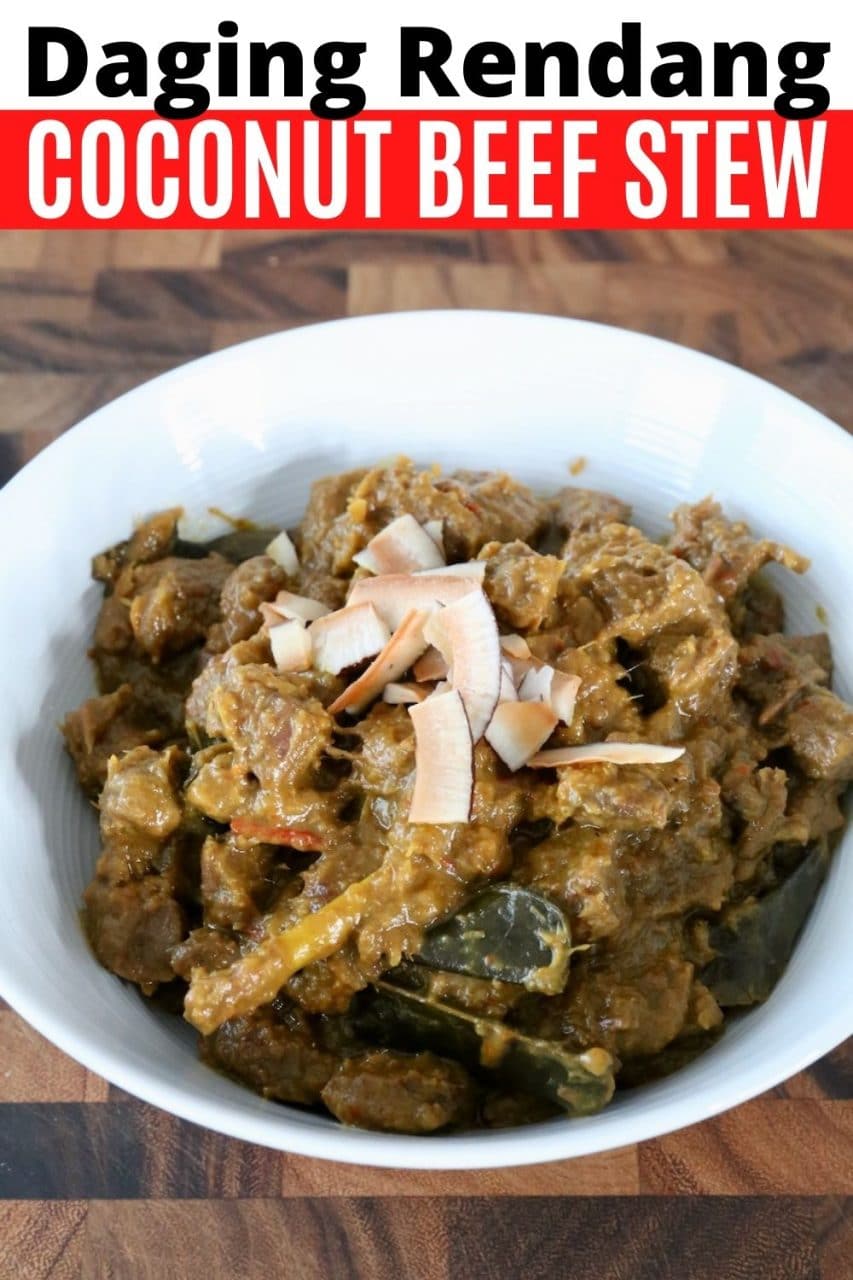
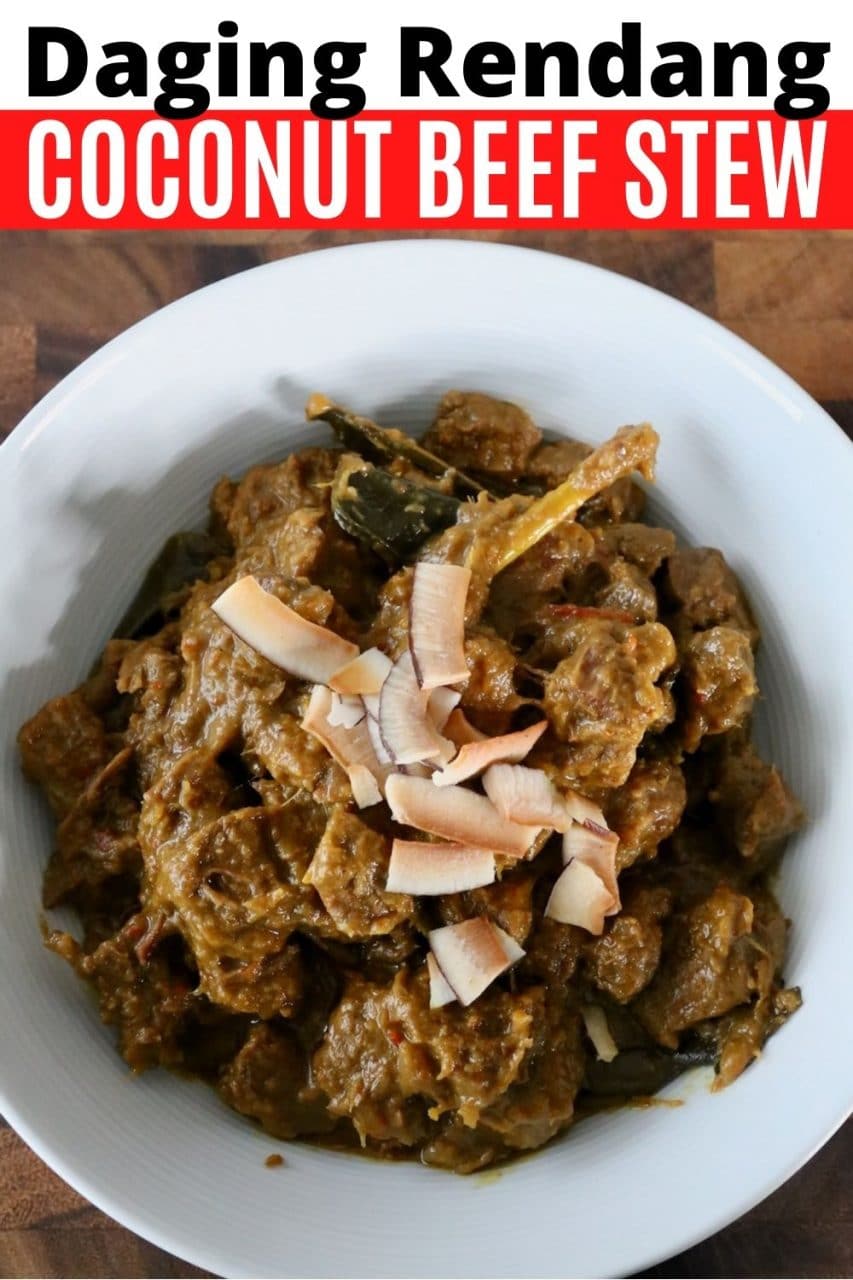
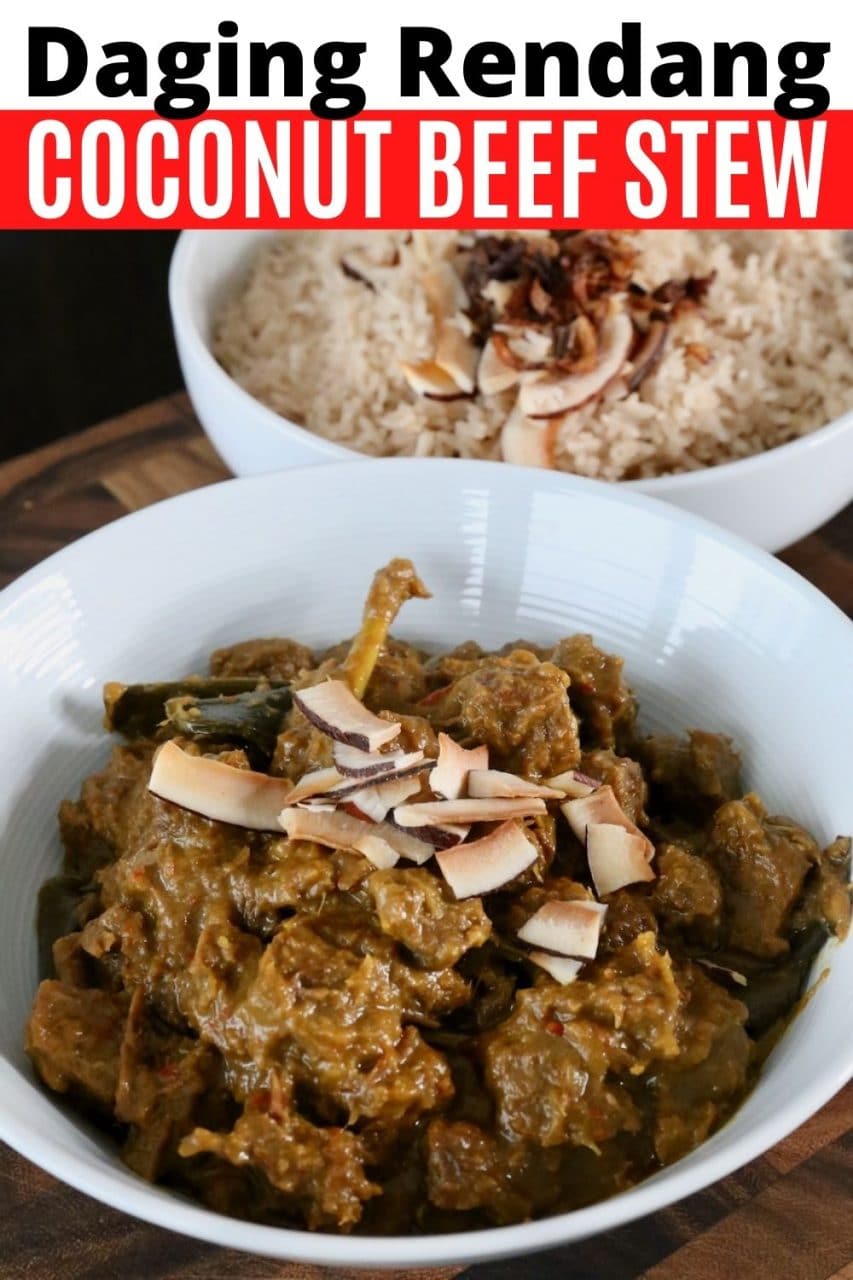
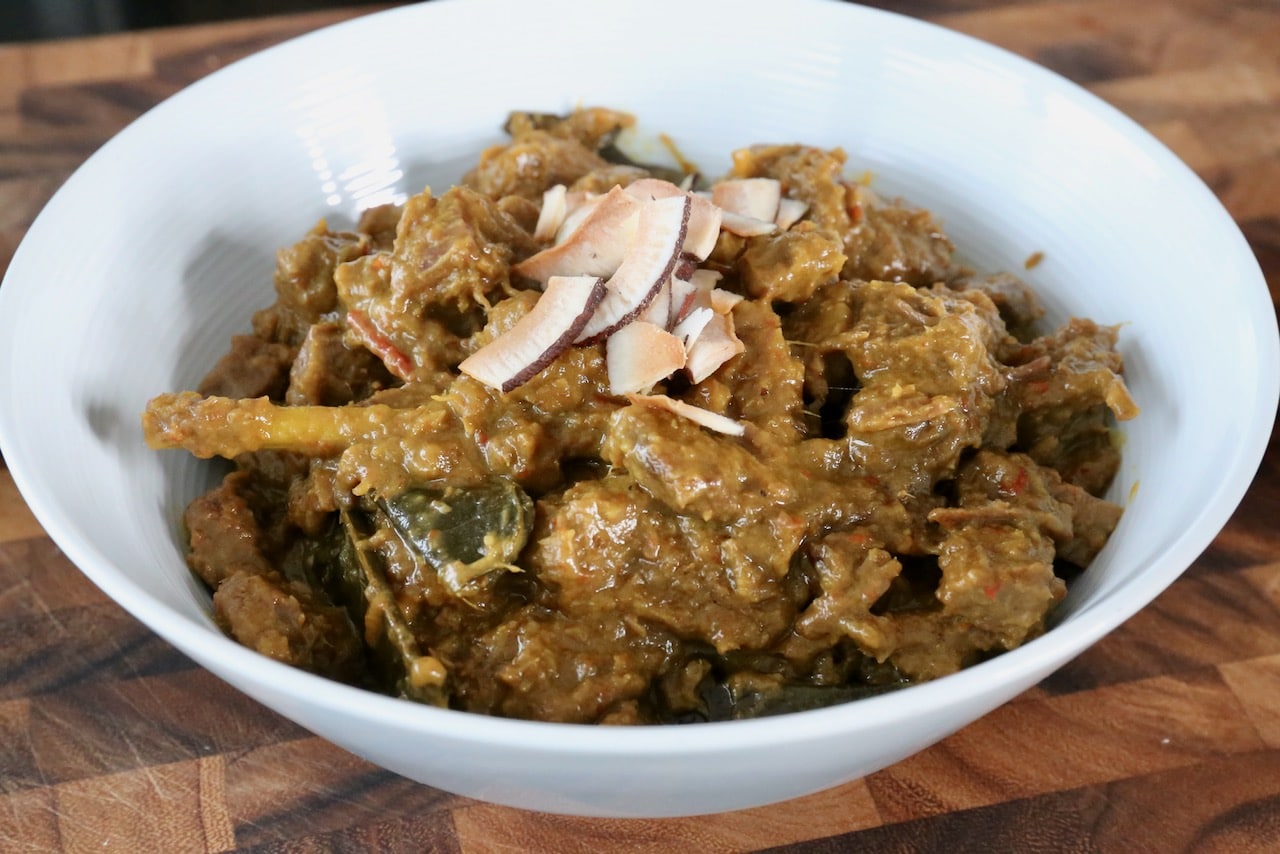
Daging Rendang, a hearty Indonesian Beef Stew, is our favourite comfort food from Sumatra.
Considered one of Indonesia’s national dishes, the popular dry curry is slow cooked to produce tender beef chunks that are typically served with rice.
The flavourful Indonesian Beef dish is packed with flavour thanks to the addition of coconut milk, fish sauce, lemongrass, lime leaf, garlic, shallots, galangal and spices.
Serve our homemade Daging Rendang Indonesian Beef Stew recipe as a main course topped with crunchy coconut chips and spicy sambal.
Save this story to Pinterest!
What Is Daging Rendang?
Daging Rendang is a Minang dish originating from the Minangkabau region in West Sumatra, Indonesia.
Often considered one of Indonesia’s national dishes, Daging Rendang spread as an Indonesian culinary staple to the food cultures of neighbouring Southeast Asian countries such as Malaysia, Singapore, Brunei and the Philippines.
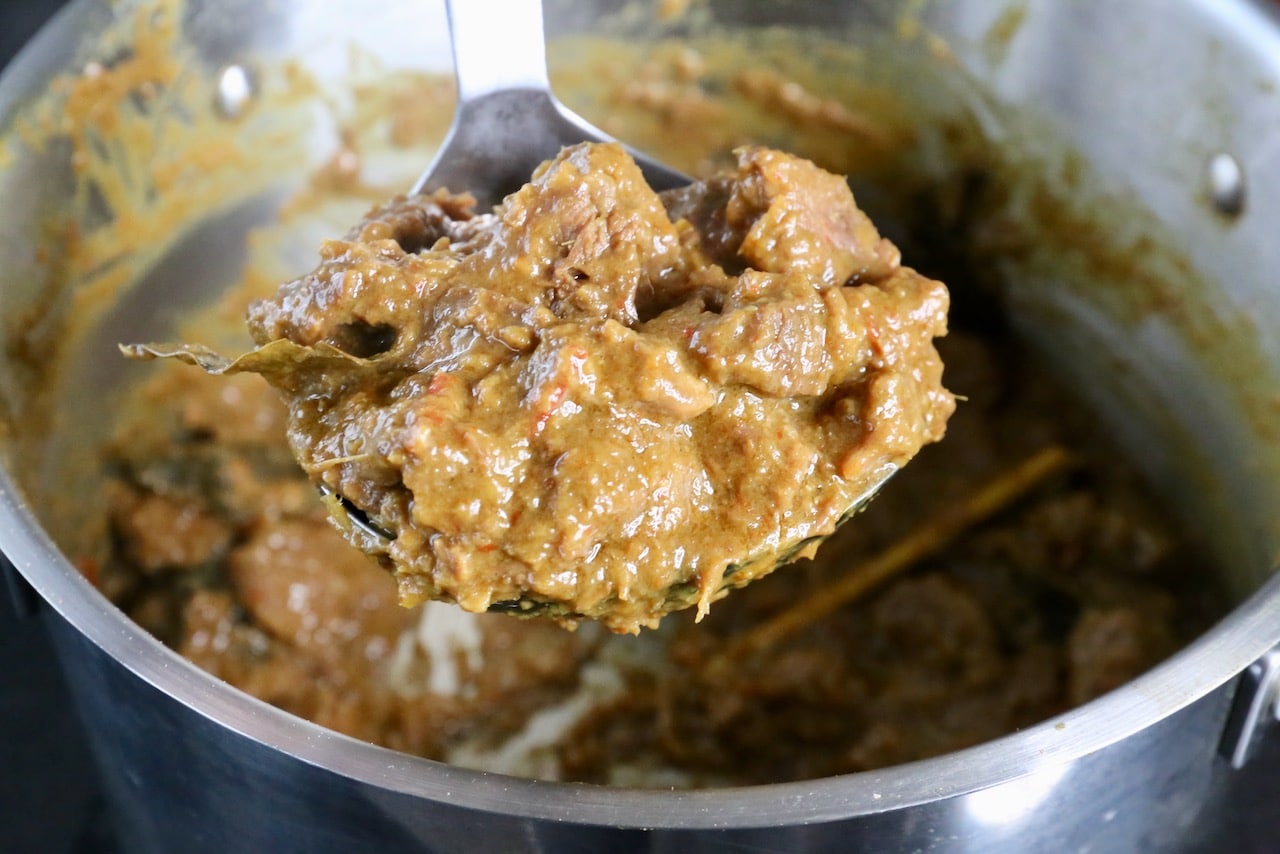
Rendang is typically described as a rich dish of meat, most commonly beef (Rendang Daging), that has been slow cooked and braised in a coconut milk seasoned with a herb and spice mixture, until the liquids evaporate and the meat turns dark brown and tender, becoming caramelized and infused with rich flavours. This unique style of cooking is called a dry curry, as it does not have a liquid sauce like Thai Green Curry.
Since Indonesian Beef Stew is a comfort food and hearty meat dish it’s traditionally served at ceremonial occasions to honour guests during festive events, like weddings and Eid.
The origin of this now iconic Indonesian Beef dish can be traced back to Indian merchant links to West Sumatra before the 15th century. There are Dutch archives in Minangkabau that note regular contacts between India and West Sumatra in the early second millennium. Local culinary historians suggest that north Indian curry was likely the precursor of to Daging Rendang.
Because the journey through the river waterways in Sumatra took so much time, a preserved dry rendang was suitable for the arduous journey. Dried Indonesian Beef is a durable food, good to consume for weeks, even when left at room temperature.
Today, the mouth-watering Indonesian Beef dish is served in Indonesian and Malay restaurants and prepared lovingly in home kitchens. The fragrant stew is typically served with rice and spicy sambal.
Travel to Indonesia by Making Daging Rendang at Home
I love traveling to Asia.
My first visit on the continent had me living in South Korea for a year as a teacher and it’s where I was first introduced to fermented vegetables like kimchi.
After my contract ended in Seoul I travelled throughout Asia for 6 months, visiting the Philippines, Indonesia, Singapore, Cambodia, Laos, Myanmar, Thailand, Vietnam, The Maldives, India and Malaysia.
In 2008 I spent 2 months backpacking through Indonesia, adventuring through Yogyakarta, Borobodur, Gunung Bromo, Gili Trawangan, and Bali. I fell so head over heels in love with Bali that years later I returned as a food and travel journalist to write the ultimate Bali Honeymoon Guide.
I dined at some of Indonesia’s best restaurants while exploring Bali’s Best Hotels & Resorts and fancy Bali Cocktail Bars. I was on the hunt to sample the must-try tastes of Bali, such as Babi Guling, Nasi Goreng, Mie Goreng, Lawar, Satay, and Daging Rendang. Many of these traditional Indonesian dishes served in Bali are accompanied by the popular condiment sambal.
I became a fan of traditional Indonesian Beef as I’ve always been a fan of rich and flavourful stews like Beef Stroganoff.
I first tasted the dish while eating lunch at a local restaurant in Yogyakarta. The canteen-style eatery was serving a buffet of local delicacies and I opted for the Indonesian beef, crunchy corn fritter, sticky rice and spicy sambal.
The explosion of flavours in my mouth after biting through tender chunks of coconut flavoured beef…I was in love!
If you’ve traveled to Indonesia and fallen in love with Daging Rendang it’s easy to recreate the dish at home by making our easy recipe!
Where To Eat Traditional Daging Rendang
If you live in a large city in Canada or America you’ll likely have access to local Southeast Asian restaurants that serves their own Daging Rendang.
Haven’t traveled to Asia before? It may be helpful to first sample Rendang at a local Indonesian or Malaysian restaurant to better understand how the dish is served. You can determine the perfect spicy heat level, ideal thickness of the dry curry sauce, and complimentary dishes to serve at the table.
In Toronto, popular Indonesian and Malaysian restaurants that may serve an authentic Daging Rendang recipe include Borrel Restaurant, Little Sister, Soos, Gourmet Malaysia, Restoran Malaysia and NaiNai.
My Family Loves Indonesian Beef Stew Daging Rendang
I love cooking regional dishes inspired by my travels for friends and family.
After extensively traveling through Indonesia, Malaysia and the Philippines I fell head over heels in love with Daging Rendang.
I was excited to return home to recreate the fragrant beef stew in my kitchen the next time my family was coming over for dinner.
I prepared this easy Indonesian Beef recipe on a cold winters day as the perfect cozy comfort food. Rendang requires a slow cooking technique to tenderize the tough cuts of beef. I left the pot simmering on the stove and read a book while the kitchen perfumed with the exotic flavours of coconut, lime leaf and lemongrass.
I knew my parents would love Indonesian Beef Stew because they enjoy hearty beef stew, creamy coconut sauces and fragrant spices.
The dish was such a hit we usually make it at least once a year, served with steamed rice and homemade sambal.
Indonesian Beef Recipe Health Benefits
Our Indonesian Beef recipe is packed full of healthy ingredients!
Beef is a great source of protein and minerals like iron as well as an excellent source of the amino acid L-caine. Beef also features antioxidant glutathione known for its anti-aging benefits.
Coconut is rich in fibre and may also offer a number of benefits including improved heart healthy and digestion. It is high in calories and sautéed fat so be sure to eat in moderation.
Lemongrass is a rich source of antioxidants. It’s an effective antibacterial and anti-fungal agent.
Shallots are a humble vegetable packed with vitamins, minerals and phytochemicals. Regular consumption of onions can help boost digestive health and reduce the risk of developing heart disease.
Chili has been proven to help reduce the duration of sickness, prevent heart disease, and promote weight loss.
It is only recently that scientists have begun to identify the components responsible for garlic’s myriad health benefits. Rich in phytochemicals and potassium, garlic helps boost your immune system, fight cancer and protect your heart.
Ginger contains at least 14 phytochemicals, many of which have impressive antioxidant and anti-inflammatory properties. It also has a good source of copper, which supports your bones, blood and nervous system.
The star component of turmeric is curcumin, a potent phytochemical that has anti-inflammatory and antioxidant properties. It is often prescribed in Indian Ayurvedic medicine to help relieve arthritis, aid digestion and inhibit the growth of cancers.
A good source of bone-strengthening vitamin K, coriander is also rich in antioxidants that help protect the eyes from damage by free radicals.
A rich source of blood-building iron, cumin may also help balance your blood sugar levels and reduce bad cholesterol. It is also traditionally used as a digestive aid.
Indonesian Beef Stew Recipe Cooking Tips
This Daging Rendang recipe is easy to make at home. We’ve included a few tips and tricks to get you started:
- Visit your butcher or the meat counter at your grocery store to purchase stewing beef. These flats are usually sold as chunks of beef, which come from various cuts of tough meat like chuck, flank, brisket or shanks.
- We’ve used Thai Long Red Chilies in this recipe rather than spicier Bird’s Eye Chilies. If you don’t like spicy food remove the seeds and just use the flesh of the chilies.
- Cook the Indonesian Beef Stew in a Dutch Oven or large pot with a firm lid to ensure the beef tenderizes nicely thanks to the internal steam.
- We’ve used brown sugar to sweeten the stew but you can substitute with Palm Sugar, which is more authentic in Southeast Asian cuisine.
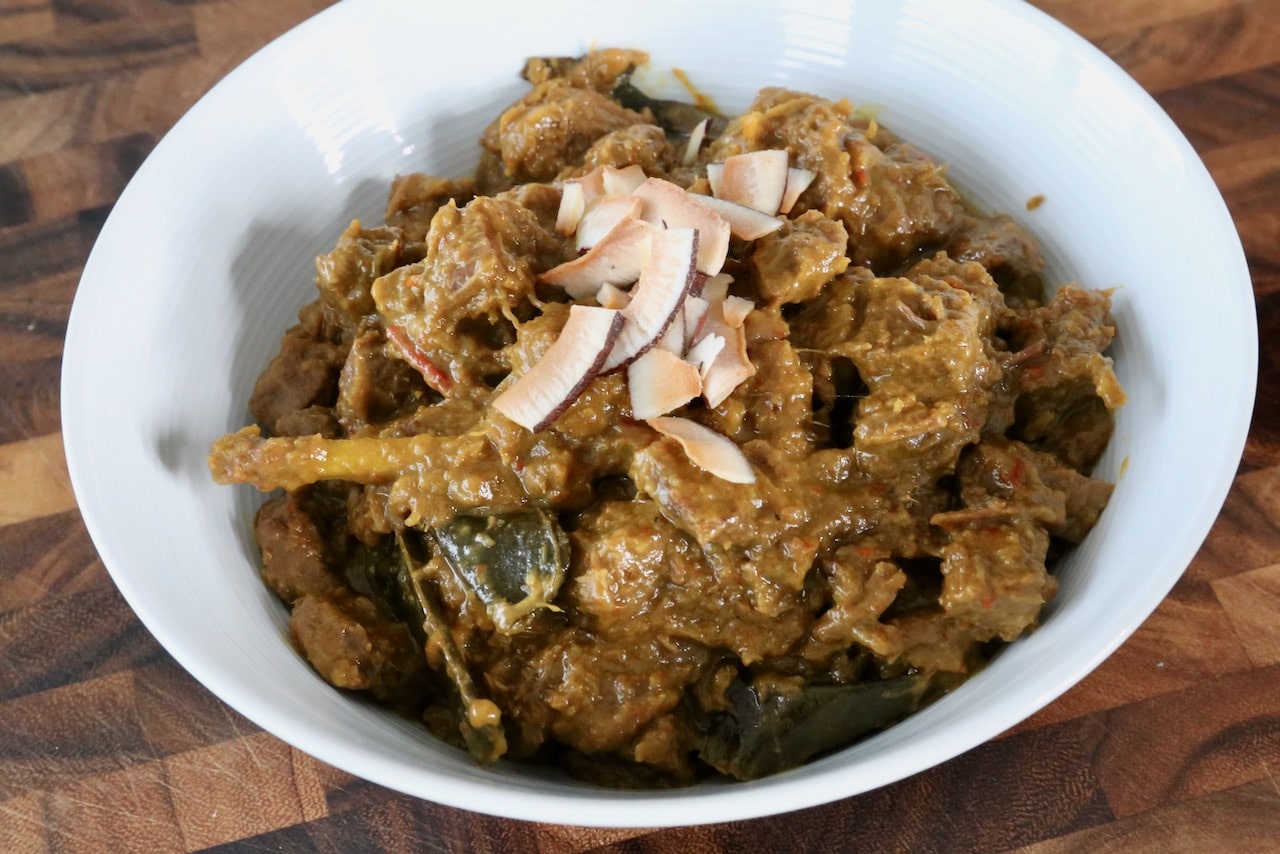
- Garnish the dish with Coconut Chips or toasted coconut before serving.
What To Serve with Indonesian Beef
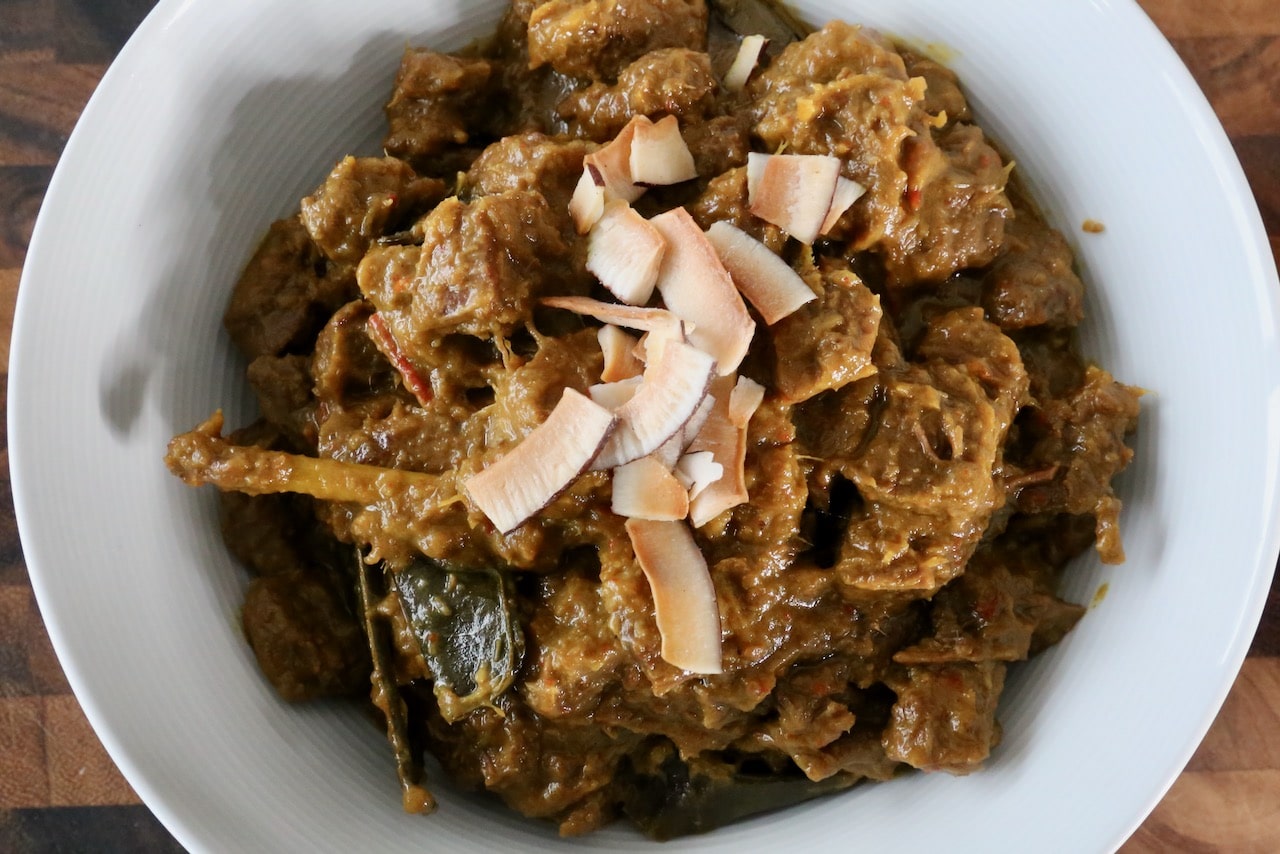
Indonesian Beef Stew is a hearty main course we love to serve with steamed rice.
Since the dish is a heavy comfort food a healthy soup, fresh salad and homemade sambal are an ideal accompaniment at the table.
If you’re hosting an Indonesian, Malay or Singaporean dinner party you might like to serve this Daging Rendang recipe with these popular regional recipes:
- Perkedel Jagung Crispy Indonesian Corn Fritters
- Asinan Sayur Indonesian Coleslaw Cabbage Salad
- Acar Timun Indonesian Cucumber Pickles
- Penang Prawn Noodle Soup Hokkien Mee
- Vegetarian Roti Canai Curry
- Seafood Laksa Singaporean Shrimp & Fish Soup
- Singaporean Bak Chor Mee Minced Pork Noodle Soup
- Vegan Citrus “Rojak” Singapore Salad
Storing Daging Rendang
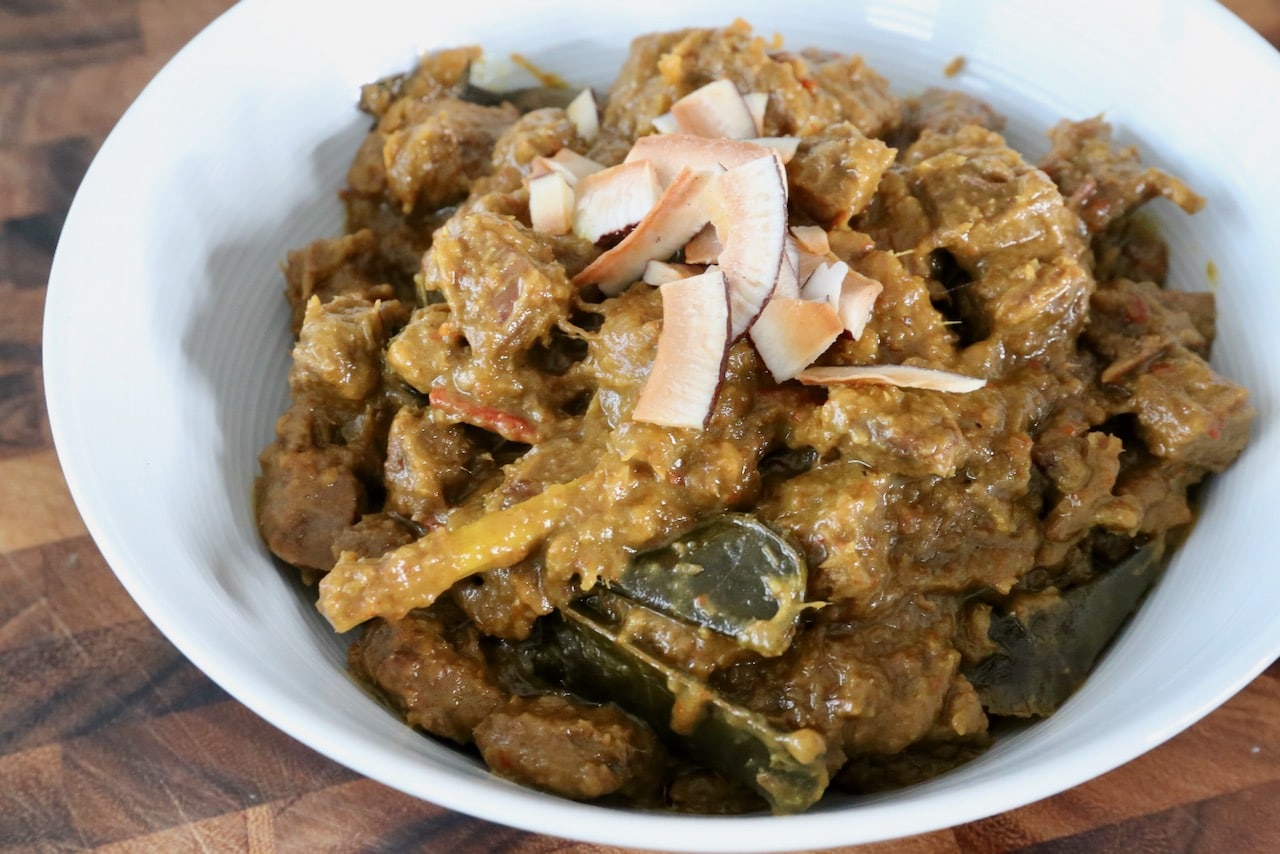
If you have leftover Indonesian Beef you can store it in the fridge in an airtight container for 3-4 days.
Reheat in a microwave or in a pot over a stove top. Add a splash of beef stock or coconut milk to loosen up the Rendang then serve once heated through.
We love doubling this Daging Rendang recipe as it freezes well, making for an easy last minute dinner during a busy work week.
You May Also Enjoy These Curry Recipes...
- Creamy Indian Chicken Handi Curry
- Gaeng Hung Lay Burmese Pork Belly Curry
- Gaeng Phed Ped Yang Roast Duck Thai Red Curry
- Pakistani North Indian Karahi Chicken Curry
- Pakistani Curry Chicken Salan
- Tangy Tamarind & Coconut Prawn Goan Curry
- Indian Chicken Keema Masala Curry
- Boller I Karry Danish Meatballs in Curry Sauce
- Tender Kerala Style Ularthiyathu Beef Fry
- Spicy Creamy Coconut Nadan Kerala Beef Curry
- Thai Tamarind Prawn Curry
- Indian Vegetarian Creamy Corn Black Bean Curry
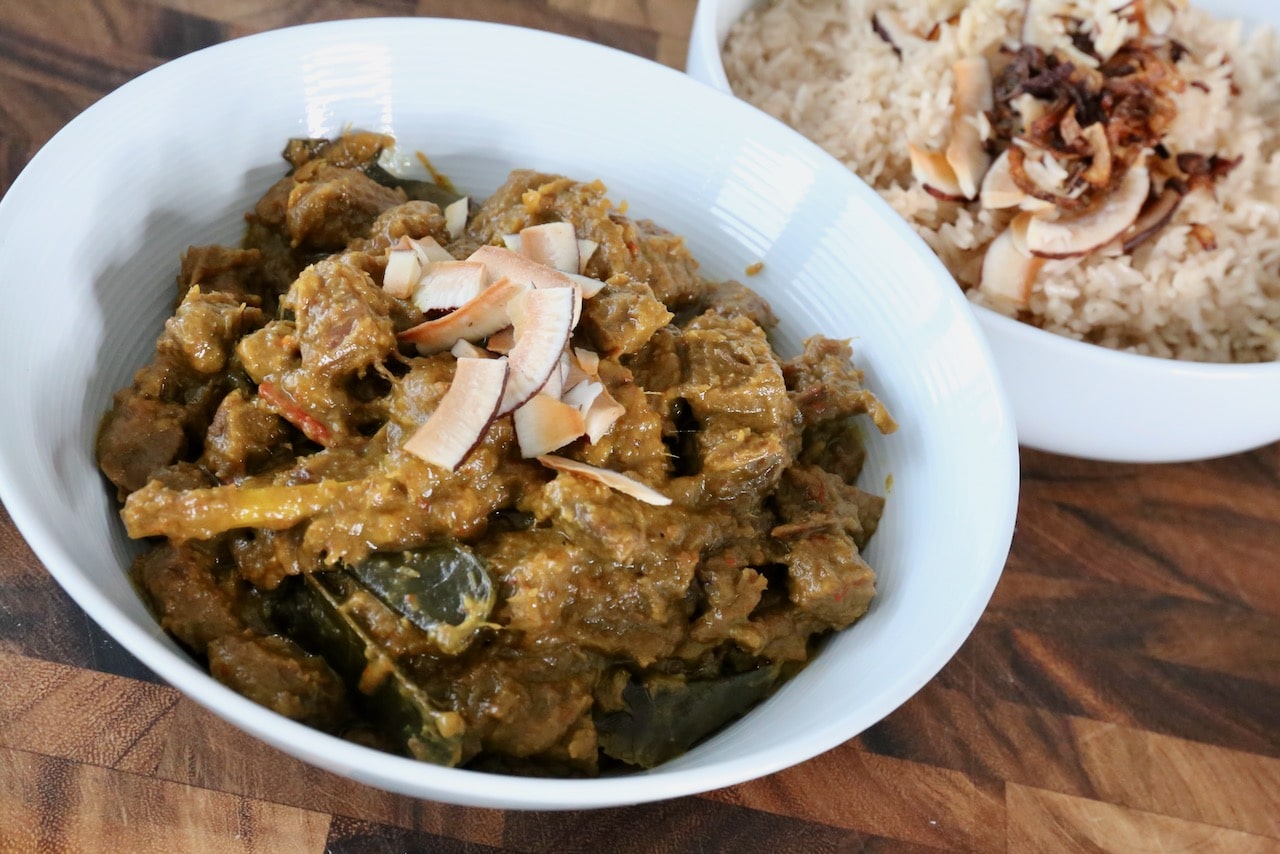
How To Make Indonesian Beef Curry Stew Daging Rendang
Rendang Daging Indonesian Beef Curry Stew
Equipment
- measuring cups
- measuring spoons
- Large pot or Dutch Oven
- Food Process or Mortar & Pestle
- French knife
- Wooden spoon or spatula
Ingredients
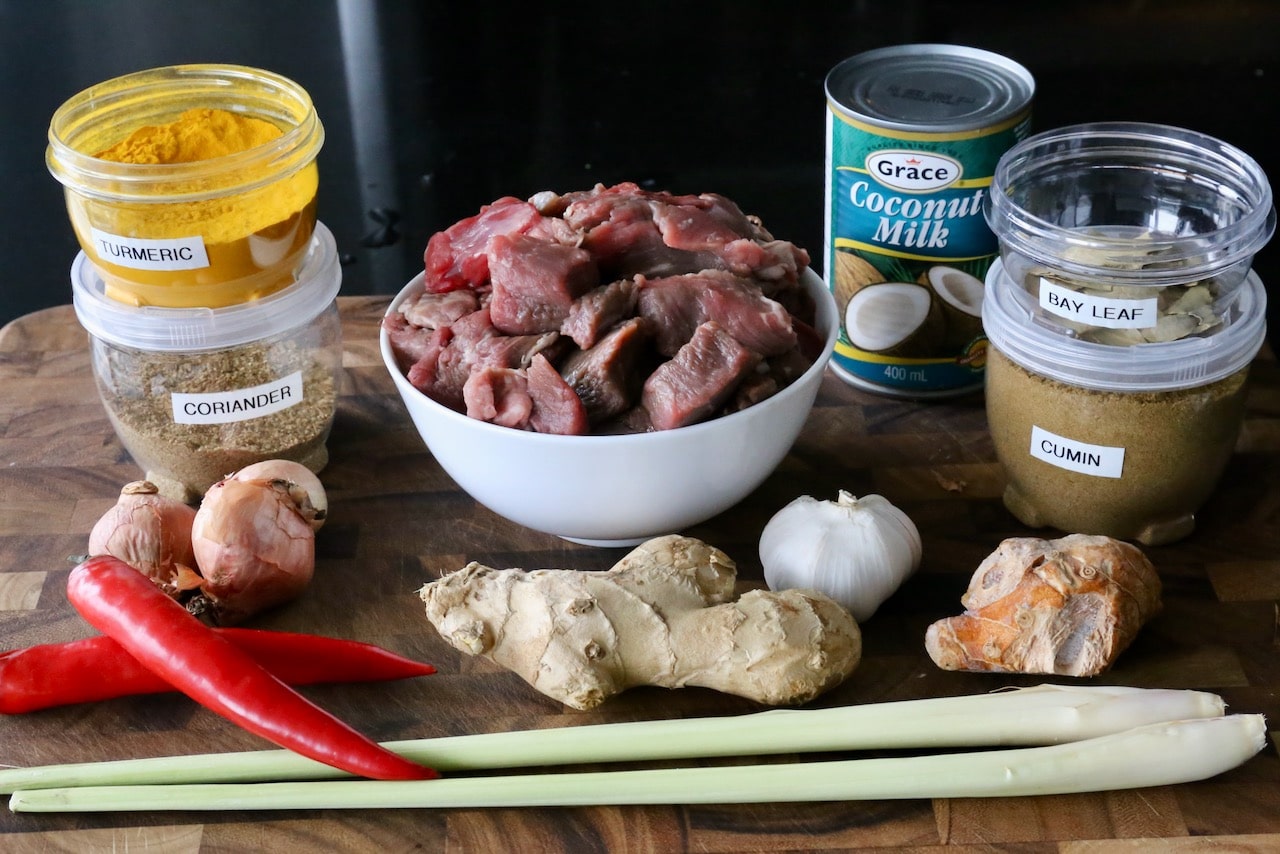
- 1 kg Stewing Beef
- 800 ml Coconut Milk
- 1 tbsp Fish Sauce
- 2 Lemongrass Stalks roughly chopped
- 3 Bay Leaves
- 5 Lime Leaves
- 2 tbsp Brown Sugar
- Coconut Chips garnish
Spice Paste
- 3 Long Red Chilies deseeded
- 4 Shallots peeled and sliced
- 5 Garlic Cloves peeled and sliced
- 40 g Ginger peeled and sliced
- 40 g Galangal thinly sliced
- 1 tsp Ground Turmeric
- 2 tsp Ground Coriander
- 1 tsp Ground Cumin
Instructions
- Place the spice paste ingredients in a small food processor or mortar and pestle and blend into a smooth paste. If the texture is too coarse, add a splash of the measured coconut milk and blend again.
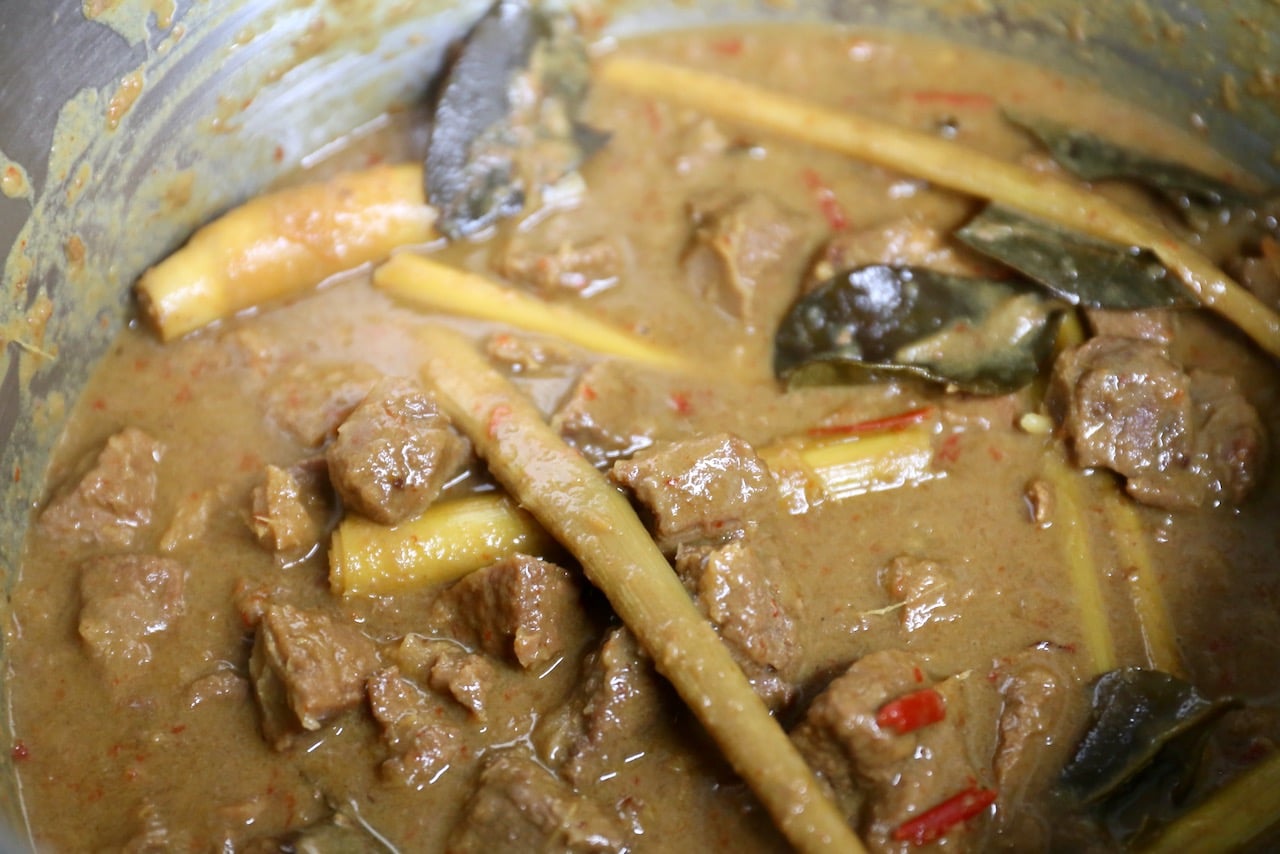
- Cut the beef into 3-4 cm chunks, removing any excess fat. Place the spice paste in a deep, heavy based saucepan along with the beef, coconut milk, fish sauce, lemongrass, bay leaves and lime leaves.
- Bring to a boil, then reduce to a gentle simmer and cover with a lid. Stir every 30 minutes to ensure the contents at the bottom of the pot do not burn.
- After 2-2 1/2 hours, the oil from the coconut milk will split and rise to the surface. Remove the lemongrass then stir in the brown sugar.
- Turn the heat up to medium high to reduce the sauce. Stir the rendang continuously until the sauce has thickened and turned deep brown. Continue stirring the beef so it absorbs the sauce and caramelizes on the outside. Taste and adjust the seasoning before serving with either fish sauce or kosher salt.
- Serve with steamed rice and garnished with coconut chips.
Nutrition
Some of the links in this story use affiliate links. This means that if you make a purchase through our site, Dobbernationloves will earn a small commission at no extra cost to you. Your support helps us to produce comprehensive content.
Save this story to Pinterest!