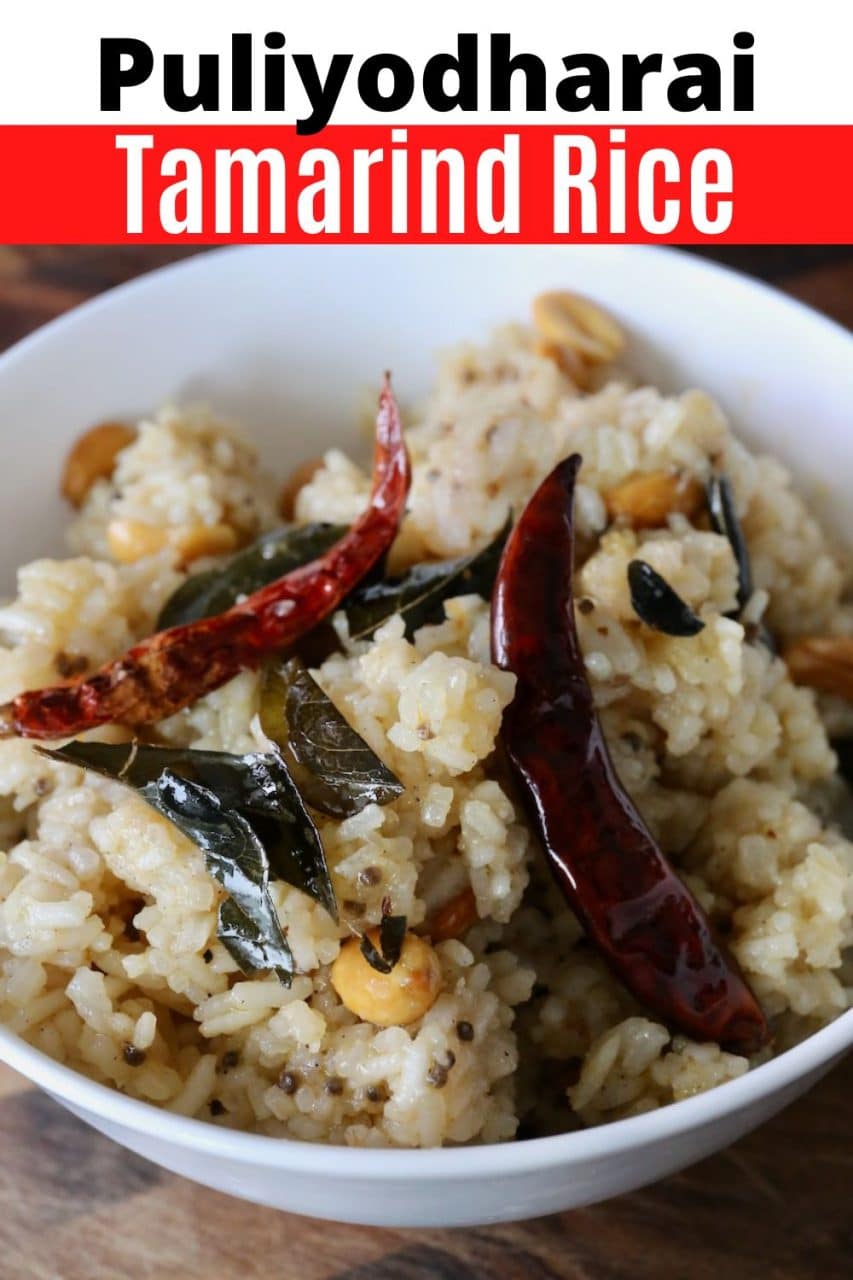
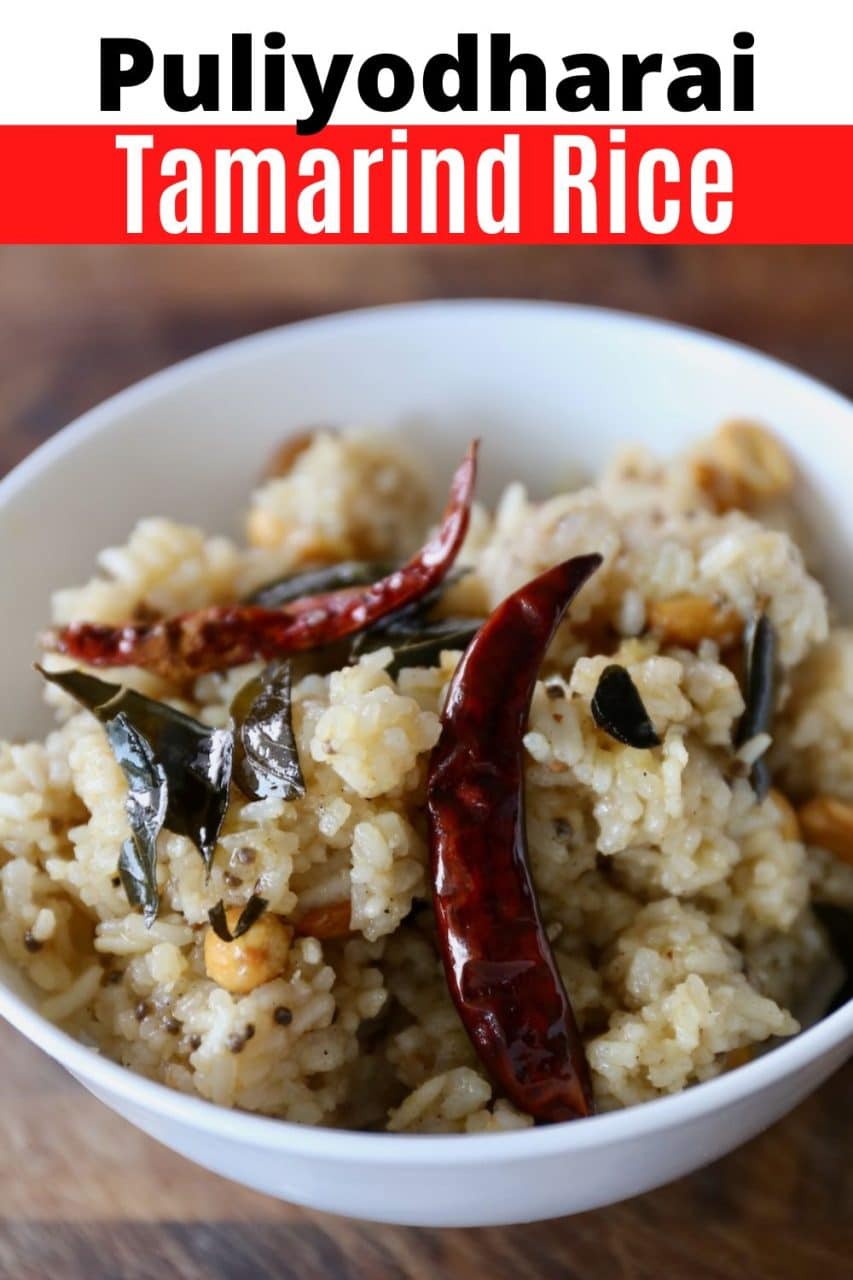
Puliyodharai is a traditional rice recipe from Southern India that is best described as tangy, sour and fragrantly spiced.
The simple vegan and vegetarian side dish features cooked basmati rice that is fried in a wok with spices like curry leaf and mustard seeds. The dish is also dotted with roasted peanuts and spicy dried red chilli.
Serve this tangy South Indian Tamarind Rice as a side dish with your favourite curries, dal and chutneys.
Save this story to Pinterest!
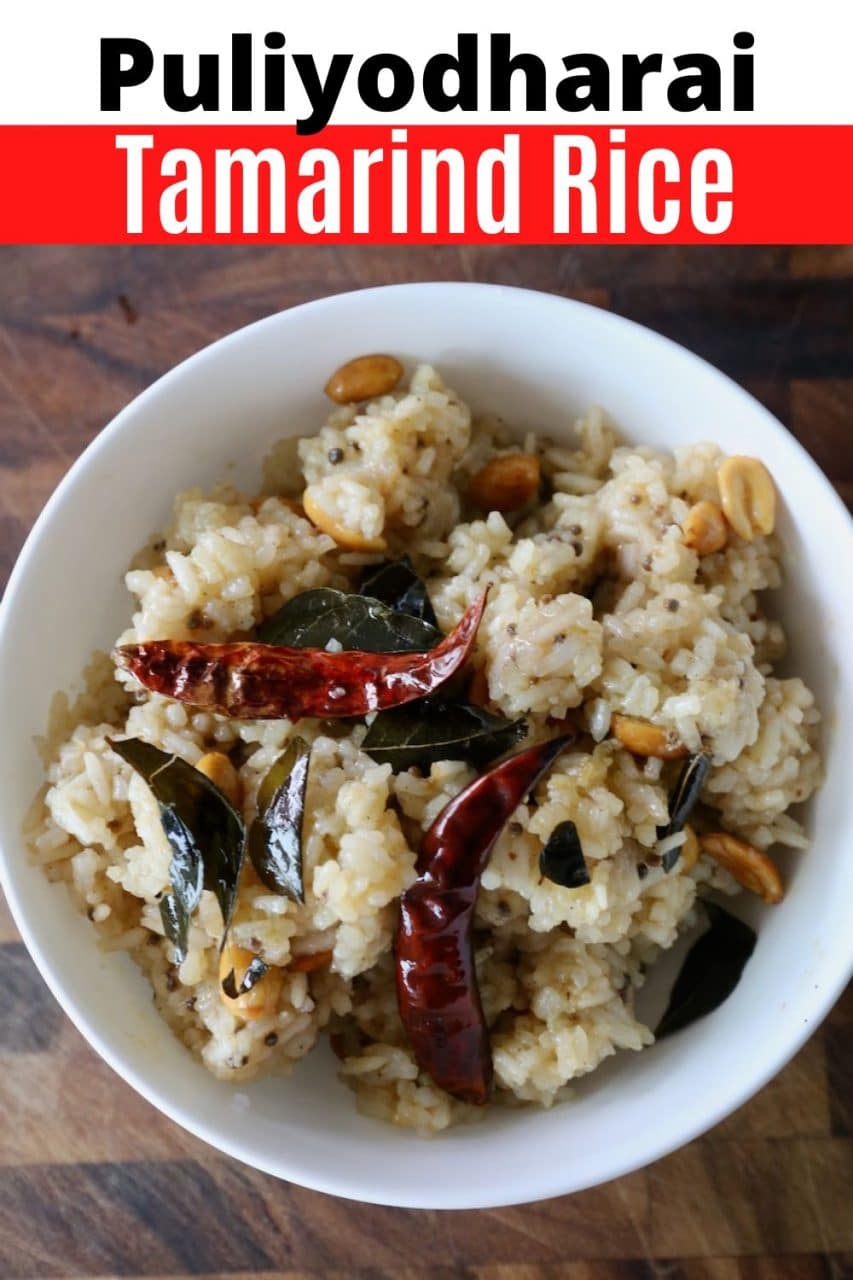
What Is Puliyodharai Rice?
Puliyodharai, also known as Pulisoru, Pulinchoru, Puliyogare, Puliyodarai, Pulihora, or simply Tamarind Rice, is a traditional rice preparation in the South Indian states of Karnataka, Kerala, Tamil Nadu, Andhra Pradesh and Telangana.
Puli means ‘tangy’ or ‘sour’ in South Indian Tamil languages, referring to the characterizing use of kokum or tamarind pulp or paste as one of the main ingredients.
Depending on the region of Southern India you are visiting there are several unique ways to prepare Tamarind Rice. The slight variations differ between each state and dishes are often referred to using different names.
In Karnataka for example, the recipe is prepared using the addition of grated coconut. In Kannada it is known as puliyogare, which means sour and tempering. In Andhra or Telugu cuisine tamarind rice is known as pulihora, which may include spicy chilies and sweet jaggery. Some local variations also include onions and garlic, as well as the act of tempering spices before mixing the cooked rice into the hot wok.
Pulihora is typically cooked for special occasions and festive days. It is presented to gods as part of prayers known as prasadam in most of the South Indian Hindu temples as well as South Indian homes.
Travel to Kerala by Cooking Puliyodharai at Home
I love traveling through Asia.
My first visit to Asia had me living in South Korea for a year as a teacher and it’s where I was first introduced to fermented vegetables like kimchi.
After my contract ended in Seoul I travelled throughout Asia for 6 months, visiting the Philippines, Indonesia, Malaysia, Singapore, Cambodia, Laos, Myanmar, Thailand, Vietnam, The Maldives and India.
I spent over a month traveling through India. I started in the capital, eating my way through the bustling markets and fine dining restaurants in Delhi. I then embarked on a magical weekend getaway to awe-inspiring Taj Mahal in Agra. In India’s north you’ll find plenty of barbecue and wheat-based flatbreads.
For the second half of my Indian adventure I explored the southern state of Kerala. The south is famous for its seafood, coconut, tropical fruits, and rice based side dishes like crispy dosa. The colonial capital of Cochin was formerly run by the Portuguese. It’s also one of the only places in India you can find beef on a menu, such as Kerala Beef Fry, which pairs perfectly with this Puliyodharai recipe.
After enjoying a jaunt to the Maldives my India trip came to a close in the Bollywood capital, bustling and cosmopolitan Mumbai. The city is famous for its specialty street foods and fine dining restaurants at opulent luxury hotels. The Taj Mahal Palace in particular serves one of the world’s most famous Afternoon Teas.
What I found most fascinating is India’s distinct regional food cultures. Much like the regional cuisines found in France, Germany, Italy or Spain, each city in India had its own local speciality.
After you’ve traveled to India, return home to prepare a fragrant feast for friends and family featuring our tangy Tamarind Rice recipe!
My Family Loves South Indian Tamarind Rice
I’ll never forget my first experience eating Puliyodharai rice.
On my last night in Cochin, the capital of Kerala, I arrived for dinner at the award winning Bruton Boatyard Hotel.
Moored on a historic stretch of Cochin’s famed harbour, Bruton Boatyard offers a tribute to another age. Resurrected from the remains of a Victorian shipbuilding yard, the historic building is a reminder of the once great trading houses which brought prosperity to the region when the pepper of Kerala was as precious as gold.
Seated at the hotel’s signature History Restaurant I flipped through Chef Ajeeth Janardhanan’s fact-packed menu. Each of his dishes reflects a different community in Cochin, a testament to the city’s melting pot of cultures.
Rifting through the menu one quickly gets a history lesson: Portuguese came to trade in spice, but left behind the ‘Indian’ red chili. The Syrian Christians cooked up a variety of pork dishes that coincidentally, tasted fabulous with the local string hoppers. The Jews found coriander both Kosher and delicious, so into the cook pot it went. And Dutch puddings were found to benefit greatly from a smidgen of fresh cinnamon.
After spending a week in India I was most intrigued by the menus beef and pork recipes, a rare find elsewhere in the country. Tender Ularthiyathu Beef offered a taste of India’s typically forbidden meat while Fernandes Roast Pork explored the tastes of Portuguese Anglo-Indians who developed their own brand of cuisine which was traditionally passed on through the ladies of the house, called choochis, a Creole term for an elderly Anglo-Indian woman.
Both dishes were complimented by a steaming pot of tangy Tamarind Rice. I was instantly hooked!
After traveling throughout India and eating at some of the world’s best Indian restaurants I was excited to share my love for Puliyodharai with friends and family back home.
I’ve hosted many Indian-themed feasts, showcasing dishes from Delhi to Bengal via fragrant curries, fresh salads and hearty soups.
When I finally introduced my parents to Tamarind Rice their eyes bulged with glee. I knew they’d both love this traditional South Indian recipe because they enjoy fragrant spices, tender rice dishes and roasted peanuts.

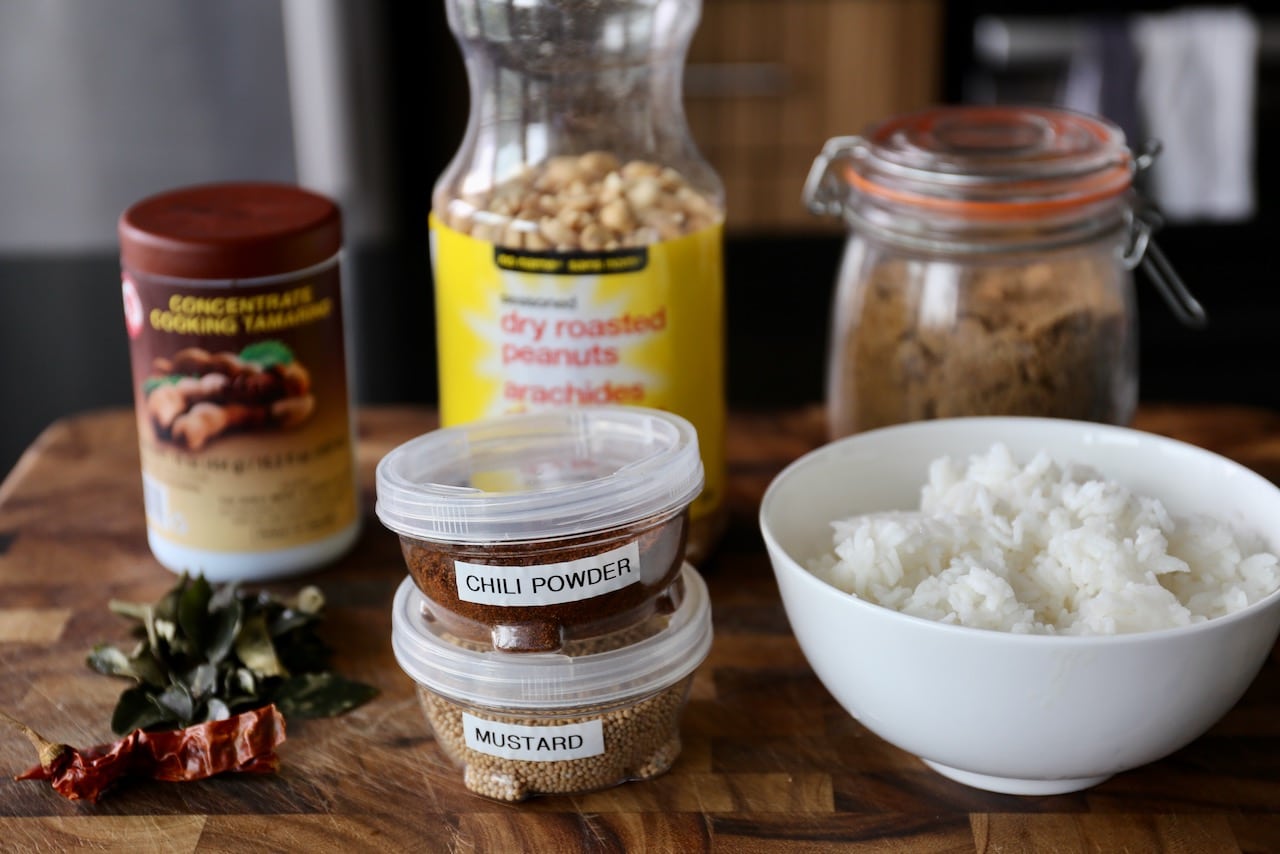
Ingredients
This classic South Indian rice dish is easy and affordable to prepare at home.
- Canola Oil: we suggest using a flavourless vegetable oil like canola but you can substitute with coconut oil, often used in South Indian cooking, which imparts a tropical coconut flavour.
- Mustard Seeds: when fried in hot oil the seeds pop and add an enticing aroma and and crunch.
- Dried Red Chillies: adds a slight heat to the dish.
- Roasted Peanuts: the central protein in the dish also adds an addictive crunchy texture.
- Chilli Powder: add additional heat to the rice.
- Fresh Curry Leaves: these fresh bright green leaves sizzle in hot oil and get crispy when cooked.
- Tamarind Paste: you can use store bought tamarind paste or prepare it homemade by adding tamarind pulp to water. You can adjust the amount of tamarind (which makes the dish sour and tangy) based on your flavour preferences.
- Brown Sugar: you can also add sweetness to the dish using palm sugar or jaggery. This helps balance the sourness of the tamarind.
- Basmati Rice: cook rice in advance in rice cooker or using the draining method, fluff it with a fork and spread it to cool down.
Directions
This easy Tamarind Rice recipe features just 3 simple instructions.
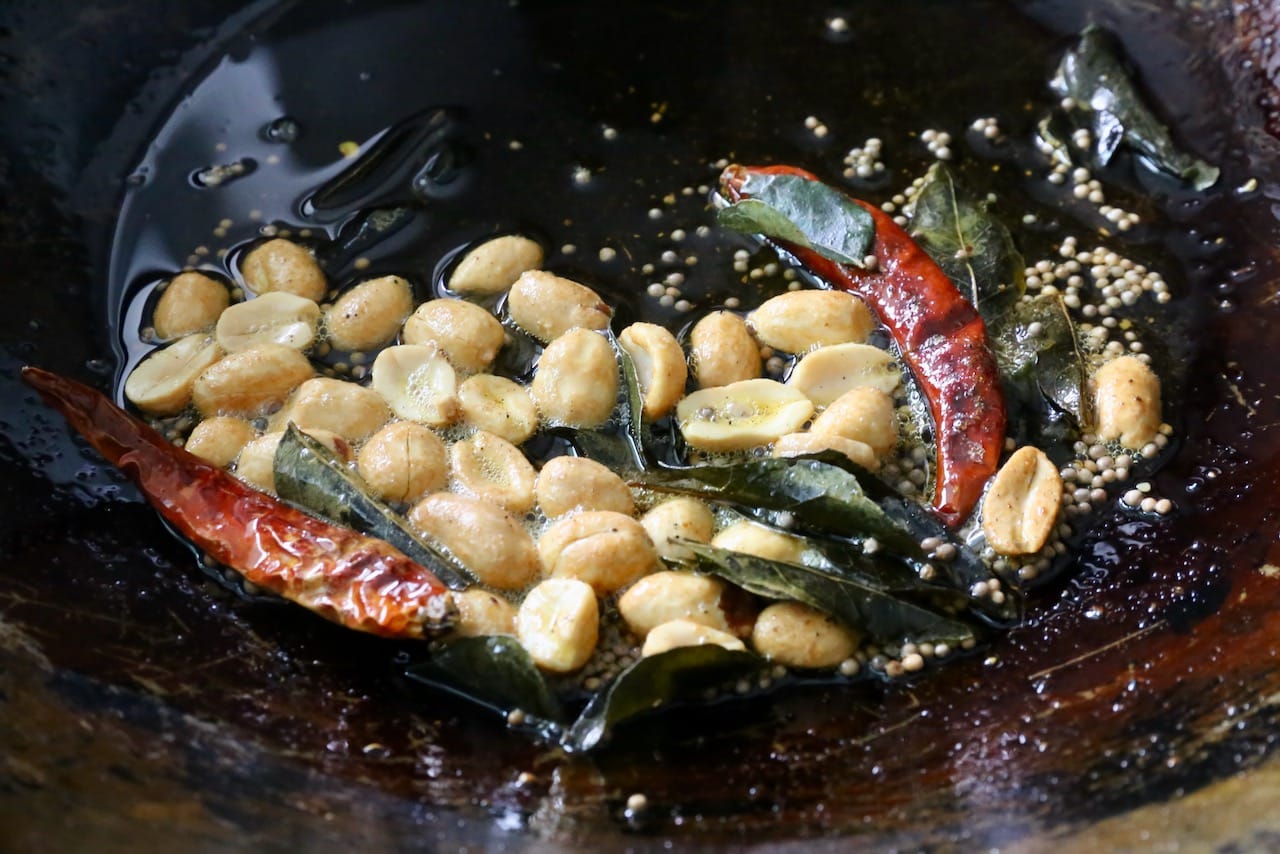
- Heat the oil over medium heat in a wok. Add the mustard seeds, dried chillies and roasted peanuts and fry for 1 minute.
- Add the chilli powder, curry leaves, tamarind paste, brown sugar and stir well. Turn off the heat. Add the cooked rice, making sure you mix everything together well.
- Season to taste and serve warm.

Puliyodharai Rice Recipe Cooking Tips
If it’s your first time cooking Puliyodharai rice at home be sure to review our step by step recipe below. Here are some helpful tips and tricks to get you started.
- We suggest using a large wok when preparing South Indian fried rice as it allows you to distribute the heat evenly and offers plenty of space to toss and stir the ingredients together without splatter.
- We suggest using a flavourless oil like canola when frying the spices and curry leaf. You can substitute with coconut oil or peanut oil if you prefer, two oils often used in South Indian cooking.
- If you like spicy food feel free to add additional dried red chilies or chilli powder.
- You can add whole roasted peanuts to the rice or crush them in a mortar & pestle before adding them to the wok.
- We prefer to use fresh curry leaf in this recipe but you can substitue for dried curry leaf.
- Some regions of Southern India add shredded coconut flakes or coconut chips to the recipe.
- You can adjust the intensity of tangy/sour by reducing or adding tamarind pulp to the dish based on your flavour preferences.
- We’ve used brown sugar in this recipe as it’s the most readily available but palm sugar or jaggery is also suitable.
- Be sure to cook the basmati rice in advance and let it cool (you can do this 24 hours beforehand) as you want it to be at room temperature and not wet when adding to the wok.
Health Benefits
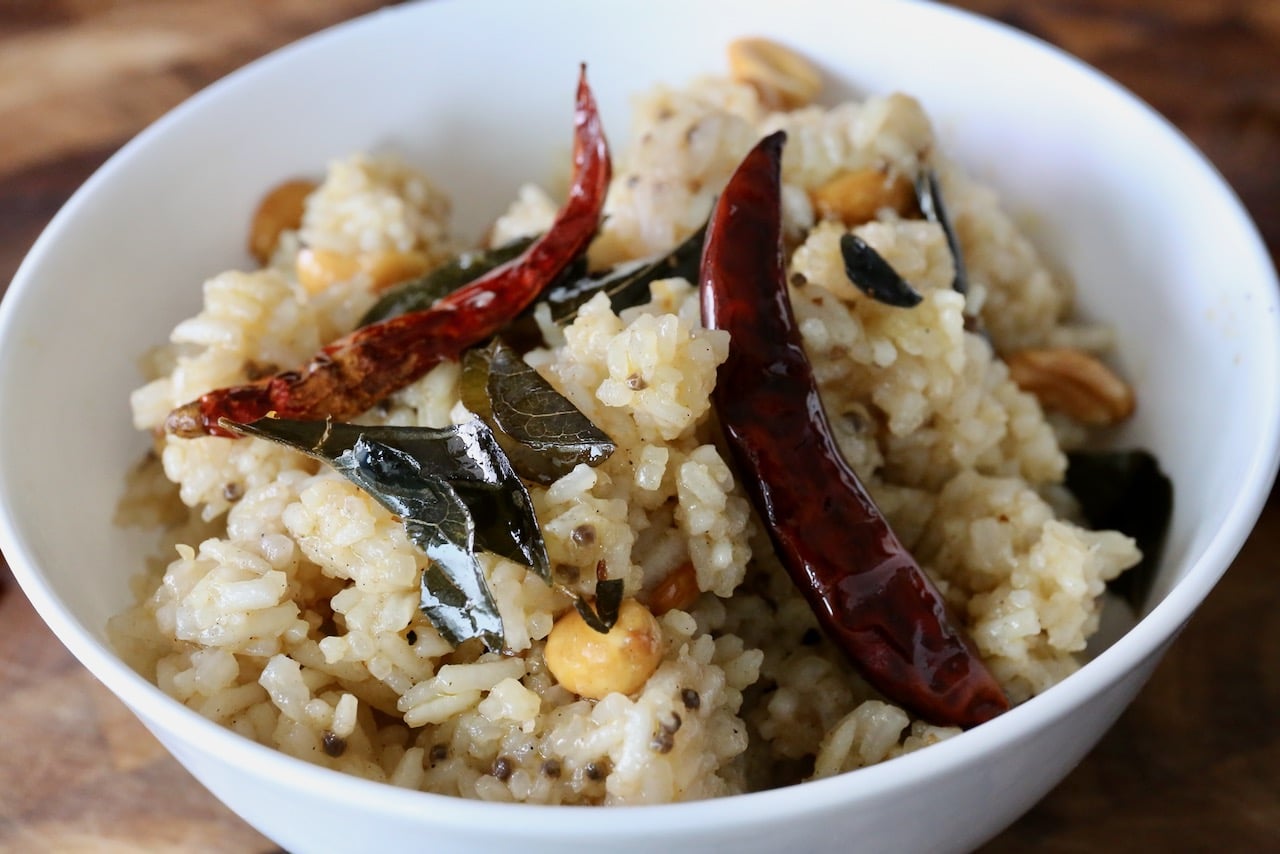
Our homemade Puliyodharai rice recipe is packed full of healthy ingredients! It’s vegetarian and vegan friendly!
Chilli has been proven to help reduce the duration of sickness, prevent heart disease, and promote weight loss.
Peanuts are rich in protein, fat, and fibre. While peanuts may have a large amount of fat, most of the fats they contain are known as “good fats.”
Tamarind is a rich source of magnesium and contains more calcium than many plant-based foods.
Nearly 50% of the people in the world get over 50% of their daily calories from rice. If eating brown rice featuring nutritious bran you’ll enjoy health benefits like cancer risk reduction and diabetes control.
What To Serve with Puliyodharai
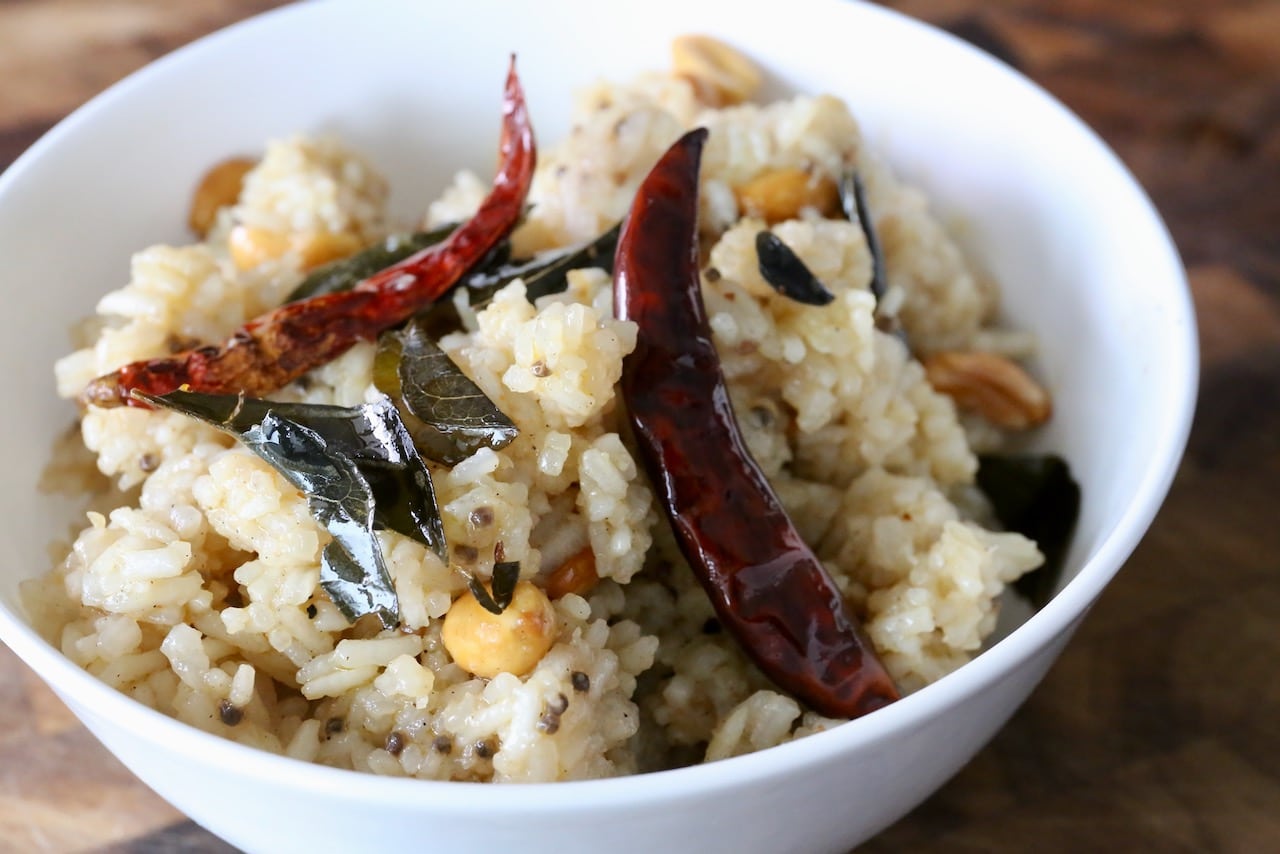
Puliyodharai is one of our favourite South Indian side dishes to cook at home.
The sour and spicy Tamarind rice is best served at an Indian dinner party as an accompaniment to curries and dal.
If you’re hosting a large Indian-themed buffet or potluck you may want to serve the dish alongside these popular recipes:
- Tofu Meatballs in Creamy Vegan Korma Curry Sauce
- Chilli Paneer Gravy Restaurant Style Masala
- Indian Vegetarian Paneer Frankie Kathi Roll
- Vegetarian Oven Baked Tandoori Gobi Cauliflower
- Indian Paneer Tikka Salad
- Pitod Ki Sabji Vegetarian Indian Chickpea Dumplings
- Vegan Curry Leaf Rice with Cashews
- Vegetarian Malai Kofta
- Vegetarian Shahi Paneer
- Spicy Indian Beef Kebab Rolls
- Vegetarian Samosa Chaat
- Chanachur Chivda Bombay Mixture Namkeen

You May Also Enjoy These Rice Recipes…
- Vegan Nasi Uduk Indonesian Coconut Rice
- Louisiana Dirty Cajun Rice Dressing
- Lemon Greek Meatball Soup Giouvarlakia/Youvarlakia
- Roasted Tomato and Mozzarella Caprese Risotto
- Spanakorizo Greek Spinach Rice
- Prasorizo Vegetarian Greek Leek Rice
- Chicken Pork & Shrimp Mexican Paella
- Riz a Djej Lebanese Rice with Chicken
- Lebanese Beef Hashweh Rice
- Mdardara Lebanese Caramelized Onion Lentil Rice
- Spicy Thai Basil Fried Rice
- Khao Pad Sapparod Thai Pineapple Shrimp Fried Rice

How To Make A Traditional Puliyodharai Rice Recipe

Puliyodharai South Indian Tamarind Rice
Ingredients
- 2 tbsp Canola Oil
- 1 tsp Mustard Seeds
- 2 Dried Red Chillies
- 1 tbsp Roasted Peanuts crushed
- 1/4 tsp Chilli Powder
- 10 Curry Leaves
- 3 tsp Tamarind Paste mixed with 3 tbsp water
- 2 tsp Brown Sugar
- 1 3/4 cups Basmati Rice cooked and cooled
- Kosher Salt to taste
Instructions
- Heat the oil over medium heat in a wok. Add the mustard seeds, dried chillies and roasted peanuts and fry for 1 minute.
- Add the chilli powder, curry leaves, tamarind paste, brown sugar and stir well. Turn off the heat. Add the cooked rice, making sure you mix everything together well.
- Season to taste and serve warm.
Nutrition
Some of the links in this story use affiliate links. This means that if you make a purchase through our site, dobbernationLOVES will earn a small commission at no extra cost to you. Your support helps us to produce comprehensive content.
Save this story to Pinterest!