Pork rillettes is one of those wonderfully rustic French dishes that prove simple food can be incredibly luxurious.
Made by slowly cooking pork in its own fat until the meat becomes fall-apart tender, rillettes are shredded into a rich, savoury spread that’s delicious served with crusty bread, cornichons and a glass of wine.
This traditional French preparation is surprisingly easy to make at home and is an excellent way to transform an inexpensive cut of pork into something special. The long, slow cooking process does most of the work, while the finished rillettes can be portioned into jars and refrigerated or frozen for later.
SAVE THIS RECIPE TO PINTEREST
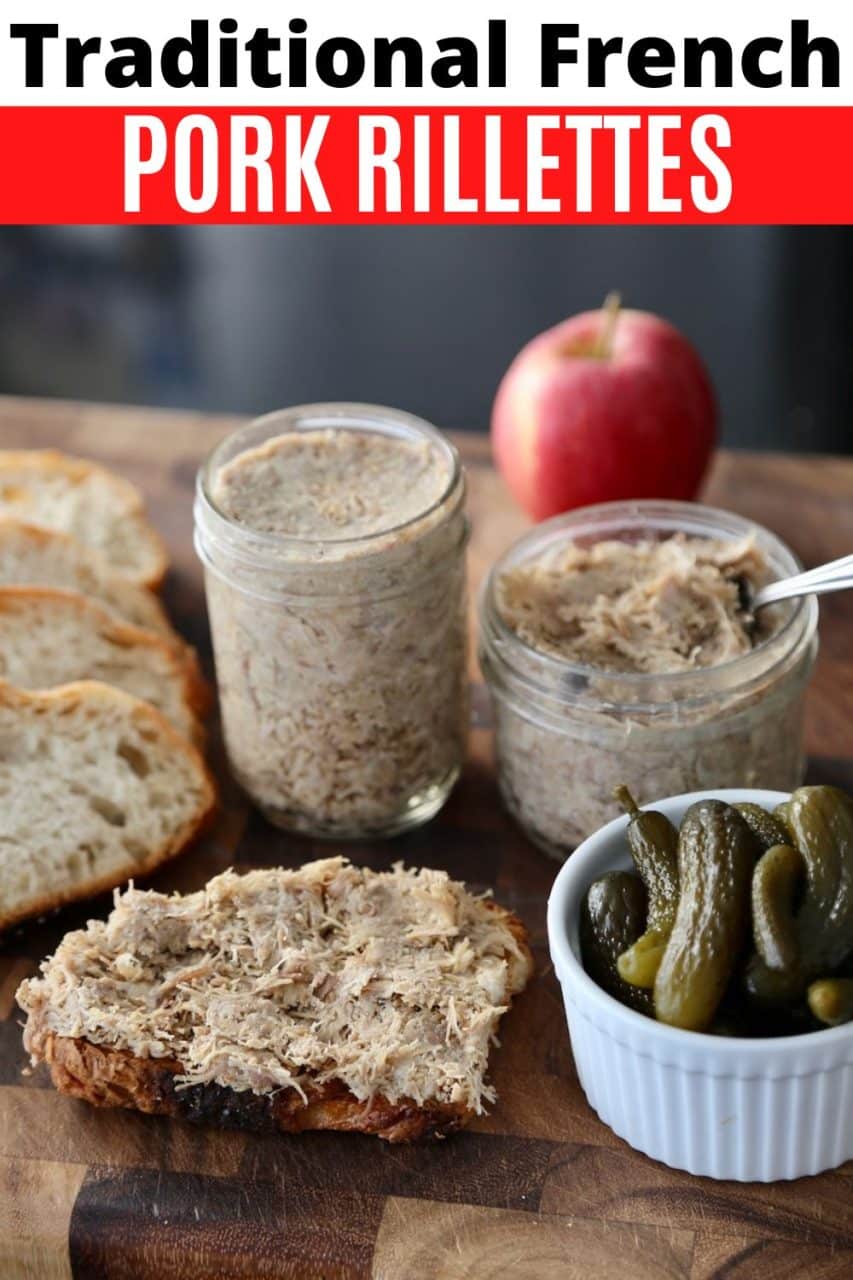
What Is Rillettes?
Rillettes are a classic French charcuterie preparation made by slowly cooking meat, most traditionally pork, duck or goose, in fat until it becomes exceptionally tender. Once cooked, the meat is shredded and mixed with enough of the rendered fat to create a rich, spreadable texture. As the rillettes chill, the fat firms up and helps pre serve the meat.
Pork shoulder/butt is particularly well suited to rillettes because it contains enough connective tissue and fat to become wonderfully succulent during slow cooking. The finished meat should be tender enough to pull apart easily with a fork, but still retain some texture rather than becoming completely smooth like a pâté.
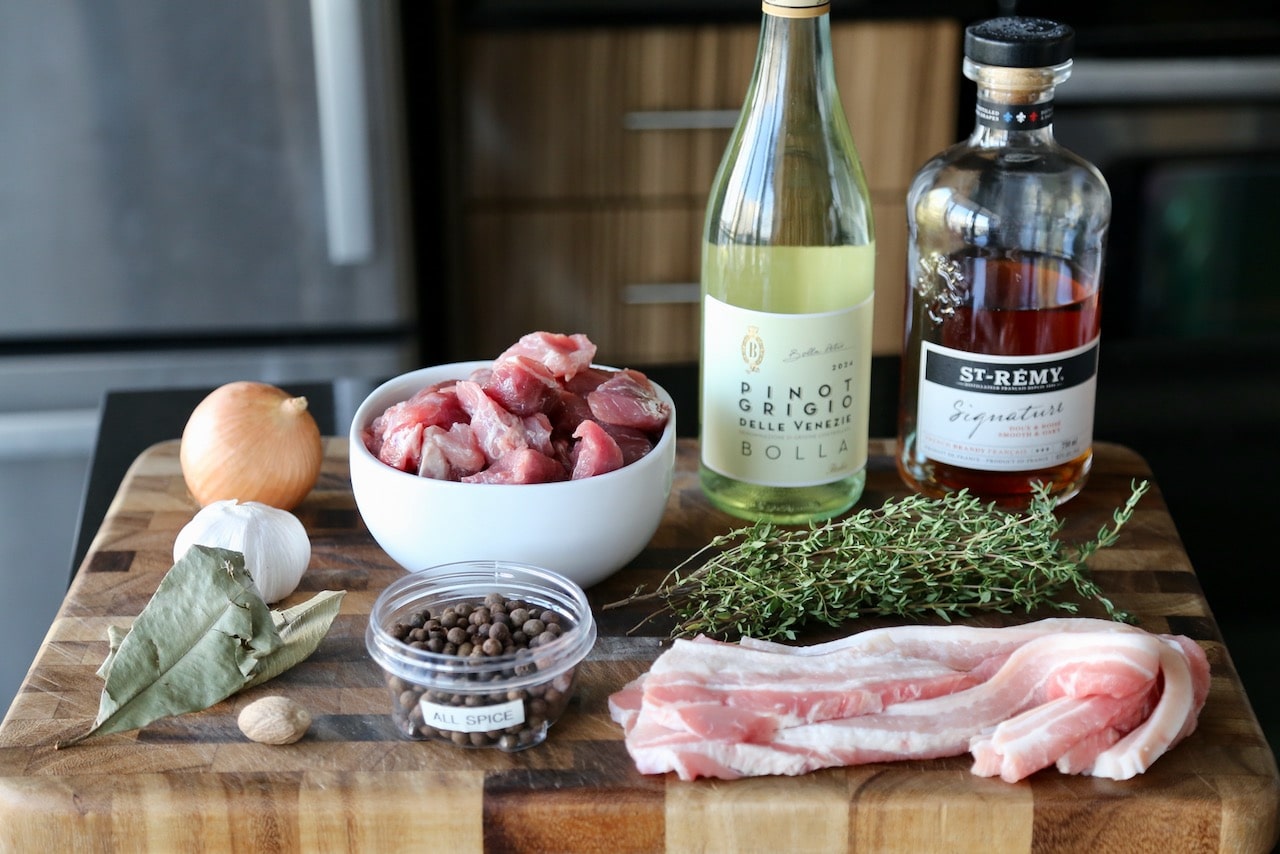
Why You’ll Love Pork Rillettes
- It’s an impressive make-ahead appetizer. Rillettes are actually better when prepared in advance, giving the flavours time to develop as they chill.
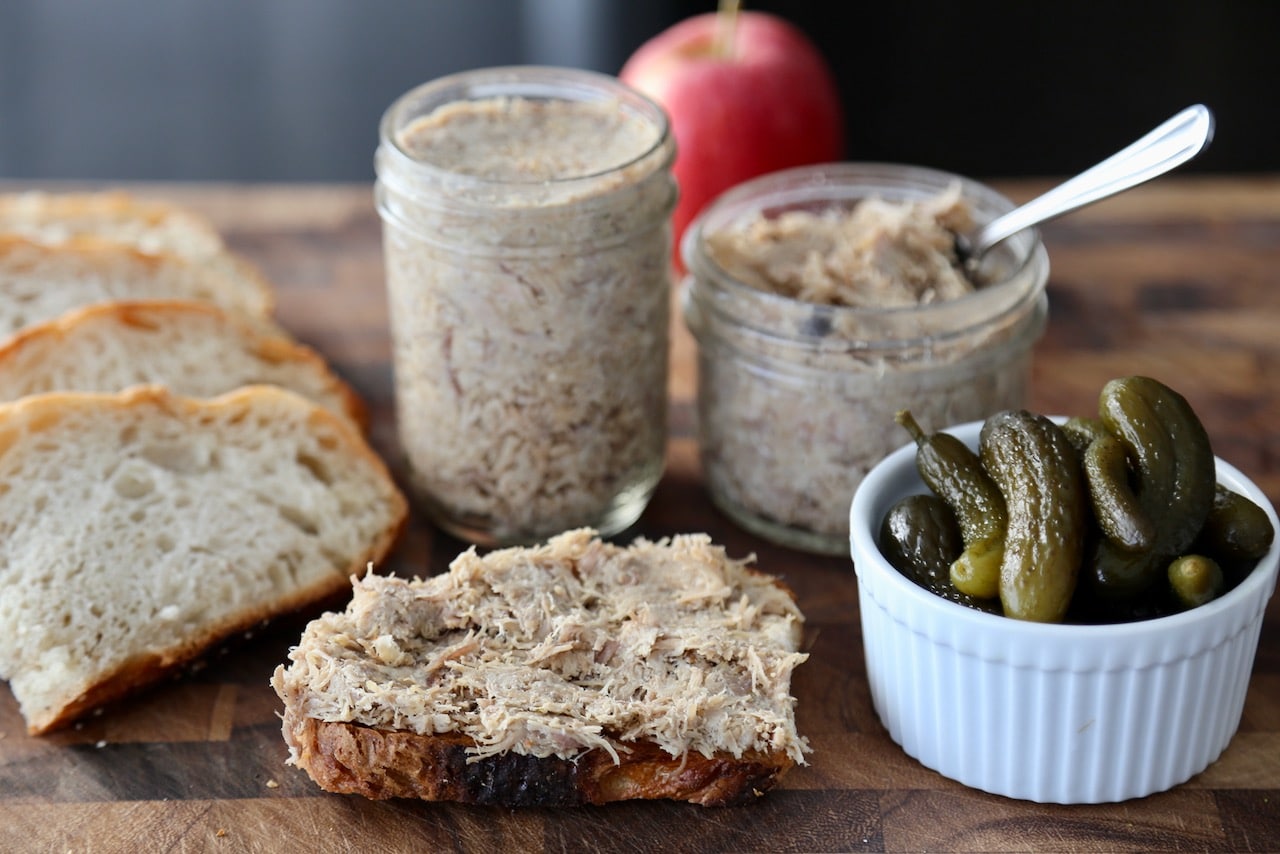
- It’s wonderfully rustic. There is something incredibly satisfying about spreading rich, savoury pork onto a piece of toasted baguette and topping it with a crisp cornichon.
- It’s economical. Rillettes traditionally make use of inexpensive cuts of pork, turning them into an elegant French delicacy.
- It’s freezer-friendly. Divide the finished rillettes into small containers or jars and freeze portions for another occasion.
- It’s perfect for entertaining. Serve rillettes as part of a French-inspired charcuterie board alongside cheese, mustard, pickles and plenty of crusty bread.

Recipe Tips
- Choose the right cut of pork. Pork shoulder is ideal because it has enough fat and connective tissue to produce tender, flavourful rillettes. Avoid very lean cuts such as pork loin, which can become dry. Our recipe also incorporates pork belly for additional fat and flavour.
- Don’t rush the cooking process. The pork should cook slowly at a low temperature until it is completely tender. You should be able to pull the meat apart effortlessly with a fork.
- Keep the meat submerged in fat. Traditionally, the pork cooks gently in rendered pork fat. If your pork shoulder is particularly lean and doesn’t produce enough fat, you may need to supplement it with additional rendered pork fat.
- Don’t shred the pork too finely. Rillettes should have a rustic, fibrous texture. Pull the meat apart with two forks or gently smush with a potato masher.
- Season generously. Pork can handle plenty of salt, and the seasoning becomes more balanced once the rillettes are chilled. Taste the shredded meat before transferring it to jars and adjust the seasoning as needed.
- Save some of the rendered fat. Once the rillettes are packed into jars, spoon a thin layer of liquid pork fat over the surface. Once chilled, it forms a protective white cap over the meat and is a classic feature of traditional rillettes.
- Let them rest. While you can eat rillettes immediately, they are even better after several hours or overnight in the refrigerator. This allows the flavours to meld and the fat to firm up.

Serving Suggestions
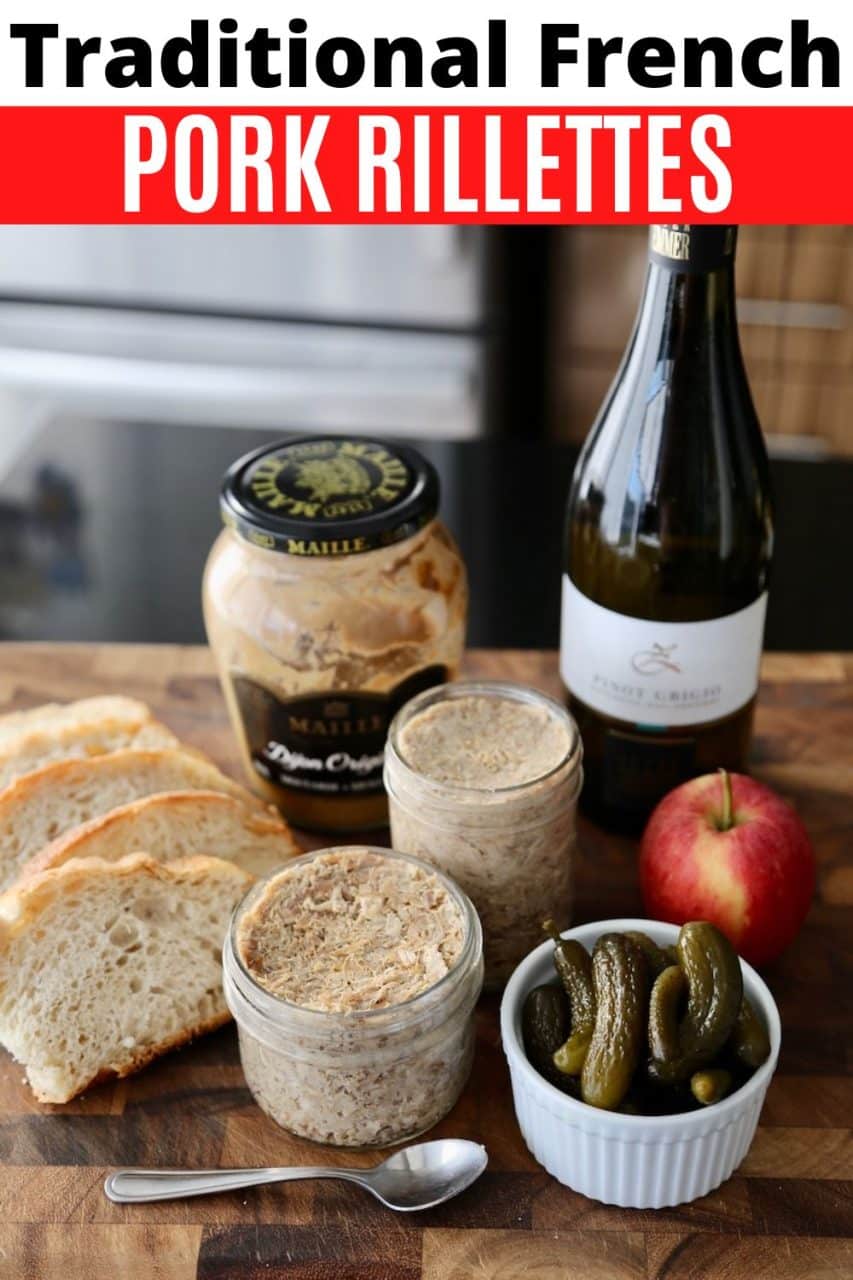
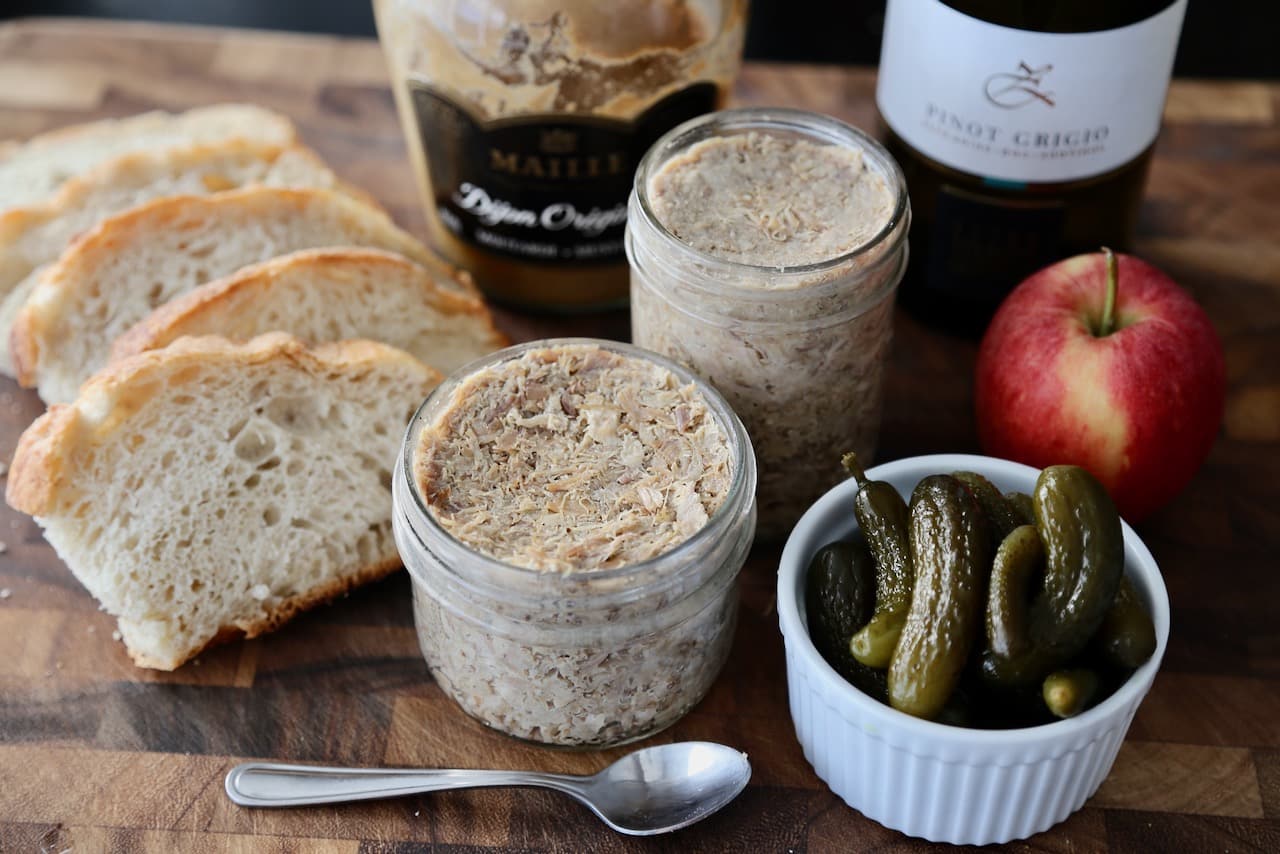
The classic way to serve pork rillettes is simply spread onto slices of crusty baguette or toasted sourdough bread. Add a dollop of Dijon mustard and a few crunchy cornichons or pickled onions for the perfect combination of rich, salty, tangy and fresh.
For a French-inspired appetizer platter, arrange the rillettes alongside cornichons, olives, Dijon mustard, sliced baguette and a selection of French cheeses. A simple green salad dressed with a sharp vinaigrette is also an excellent accompaniment, helping to cut through the richness of the pork.
Rillettes are also wonderful as part of a picnic spread. Pack them alongside good bread, pickles and seasonal fruit for an easy lunch that feels distinctly French. Once you’ve made a batch, you’ll find plenty of excuses to keep a jar in the refrigerator.

You May Also Enjoy These French Recipes
- Fromage Fort: How The French Enjoy Leftover Cheese
- Garlic Boursin Cream Cheese Mashed Potatoes
- Lillet Blanc Spritz Cocktail
- Creamy French Poulet a la Creme
- Roasted Garlic Gruyere French Tomato Tart
- Brandy Caramelized Onion French Burger
- Vegetarian French Onion Soup

French Pork Rillettes
Equipment
- Dutch Oven
- French knife
- measuring cups
- measuring spoons
- mixing bowl
- Potato Masher
Ingredients
- 1 kg Pork Shoulder cut into chunks
- 300 g Pork Belly sliced
- 1/4 cup Brandy
- 6 Garlic Cloves minced
- 1 Spanish Onion diced
- 1/2 tsp Ground Nutmeg
- 2.5 tsp Kosher Salt
- 1 tsp Black Pepper
- 10 Allspice Berries
- 2 Dried Bay Leaf
- 10 sprigs Fresh Thyme
- 1/2 cup Dry White Wine
Instructions
- In a large mixing bowl combine brandy, garlic, onion, nutmeg, salt, pepper, allspice, and bay leaf with the pork shoulder and pork belly. Cover and refrigerate overnight.
- Preheat the oven to 250ºF.
- Add marinated pork mixture to a Dutch Oven. Over medium heat cook, stirring frequently, for 10 to 15 minutes, until the pieces of pork are cooked on the outside. Stir in the thyme sprigs, cover with a lid and place in the oven.
- Lift the lid after 90 minutes of cooking. Press on the chunks of fat with a fork to release more of their fat and encourage them to break down. Add the wine, replace the lid, and bake the pork for another 1 to 2 hours, until the pork is very soft.
- Remove pork from the oven. Pick out the thyme, bay leaf and all spice berries, to discard. Press on any visible chunks of fat to get the fat out of them, then remove them from the pan and discard.
- Pour most of the fat out of the pan into a small bowl and reserve. Using a potato masher, mash the meat chunks into the juices and liquid fat until it resembles a tuna salad.
- Add enough of the reserved pork fat to make it juicy and moist. The more fat you add, the richer and creamier the finished product will be.
- Spoon the mixture into small clean jars or ramekins and press down firmly to eliminate air pockets. Smooth the surface with the back of a small spoon.
- Optional: Pour a thin layer of reserved melted pork fat over the top. This creates the classic white fat cap.
- Refrigerate for at least 12 hours, preferably 24 hours. The flavour improves as it rests.
- Serve at room temperature. Rillettes will keep in the fridge for 2 weeks and in the freezer for up to 4 months.
Nutrition
SAVE THIS RECIPE TO PINTEREST!