Traditional Olive Ciabatta is our favourite Italian bread recipe to make at home.
While tending to this well-hydrated dough takes almost 24 hours, the work involved is minimal like sourdough. It’s the perfect cozy baking project to enjoy on a cold fall or winters day.
Our recipe makes two ciabatta loaves, boasting crunchy exteriors and soft and pillowy interiors dotted with sliced green olives. Serve sliced with olive oil and balsamic at your next Italian dinner party or as an easy panini sandwich lunch.
Save this recipe to Pinterest!

How To Make Italian Olive Ciabatta Bread
There are few culinary pleasures as simple yet soul-satisfying as tearing into a loaf of freshly baked Olive Ciabatta Bread.
This rustic Italian bread, with its chewy crumb, airy holes, and crisp golden crust, has become a staple on tables across the world. But at its heart, ciabatta is a relatively modern invention, born in Italy in the early 1980s as a response to the popularity of French baguettes. Bakers in the Veneto region sought to create a loaf that would stand up to hearty Italian fillings yet maintain the country’s signature Mediterranean flair. The result was ciabatta, literally translating to “slipper,” thanks to its long, flat shape.
What makes this recipe stand out is the addition of briny, earthy green olives. Italians have long celebrated olives as a cornerstone of their cuisine, and when folded into ciabatta dough, they bring an extra punch of flavour that instantly transports you to the olive groves of Liguria or Puglia. The salty tang of green olives infuses the bread with a rustic complexity, making it the perfect companion for antipasto platters, creamy cheeses, or simple dips of extra virgin olive oil and balsamic vinegar.
I first fell in love with Olive Ciabatta in a tiny bakery tucked away in Florence’s Oltrarno district, where the warm aroma of bread baking in a wood-fired oven filled the cobblestoned streets. The loaf was served with a plate of pecorino and a drizzle of honey, a pairing so sublime it left a lasting impression. In Italian food culture, bread isn’t just an afterthought; it’s a canvas for flavours, a way to bring people together around the table, and a link between the rustic traditions of the countryside and the conviviality of urban trattorias.
Though ciabatta may be a newer bread by Italian standards, it embodies everything people love about the country’s cuisine: respect for high-quality ingredients, simple preparation, and versatility at the table. Olive Ciabatta can be enjoyed in countless ways, sliced for panini, served alongside a steaming bowl of ribollita, or simply torn apart with a glass of Chianti in hand. Its chewy texture and olive-studded flavour make it an irresistible addition to any meal, whether you’re recreating a Tuscan feast at home or searching out bakeries on your next trip through Italy.




Italian Olive Ciabatta Bread
Equipment
- Scale
- Mixing bowls
- baking sheet
Ingredients
Poolish
- 50 g All Purpose Flour (1/3 cup)
- 2 g Active Dry Yeast (1/2 tsp)
- 50 g Warm Water (1/4 cup)
Ciabatta Dough
- 360 g Warm Water (1.5 cups)
- 12 g Kosher Salt (2 tsp)
- 450 g Bread Flour (3.5 cups)
- 115 g Olives chopped
Instructions
- In a large bowl, whisk together the 50 grams flour and the 2 grams (1/2 teaspoon) yeast. Add 50 grams water and stir with a spatula until combined. Cover the bowl with a tea towel or cloth bowl cover and set aside for 3 to 4 hours or until the dough’s surface is dimpled with holes.
- To the bowl of the poolish, add the water. The sponge should release from the bowl and parts of it, if not all of it, will float. Add the salt and stir briefly. Add the flour and chopped olives, then stir until you have a wet, sticky dough ball — dough will be very sticky. Cover with a tea towel or cloth bowl cover and let sit for 30 minutes.
- With wet hands, grab one side of the dough, and pull up and to the center. Rotate the bowl a quarter turn, and repeat the grabbing and pulling. Do this until you’ve made a full circle. Cover the bowl. If time permits, repeat this process three more times at 30-minute intervals for a total of 4 sets of stretches and folds over the course of two hours.
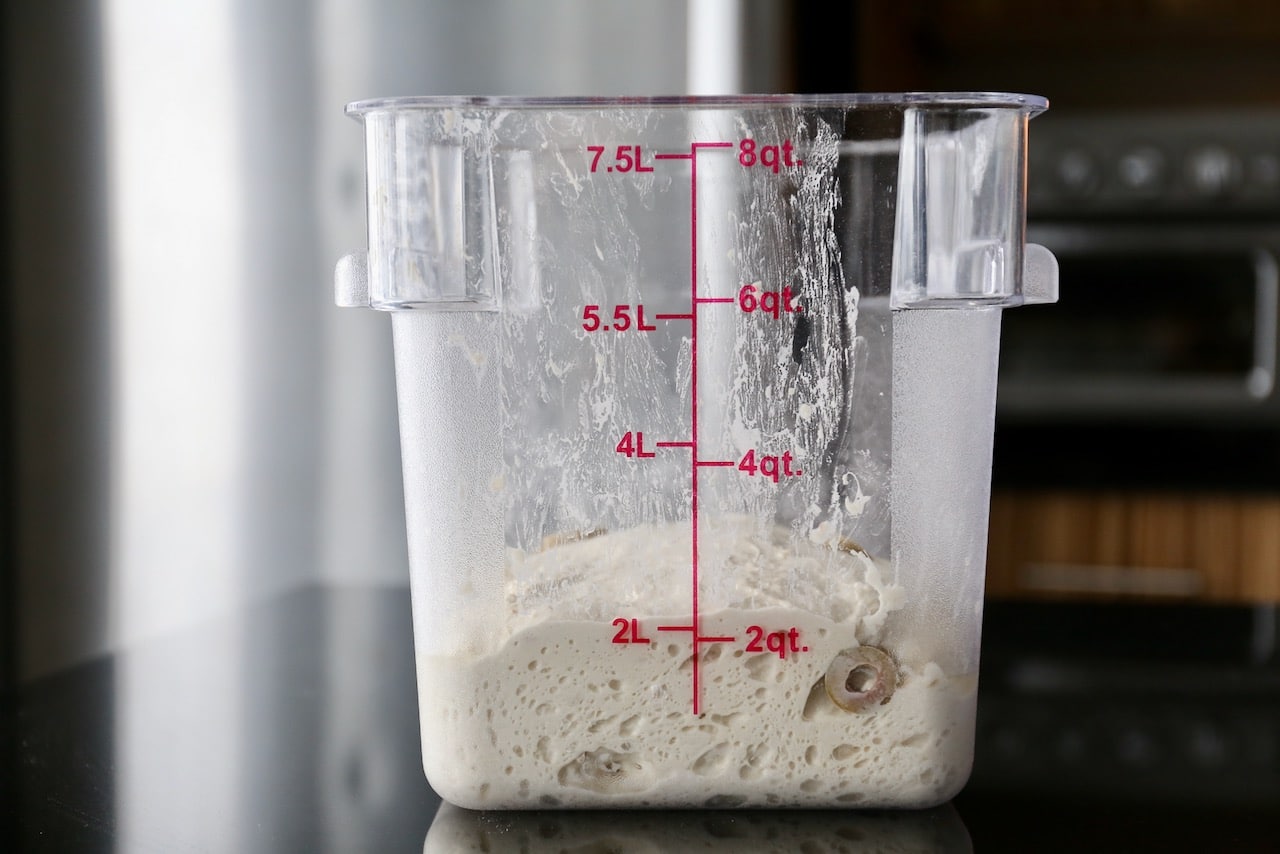
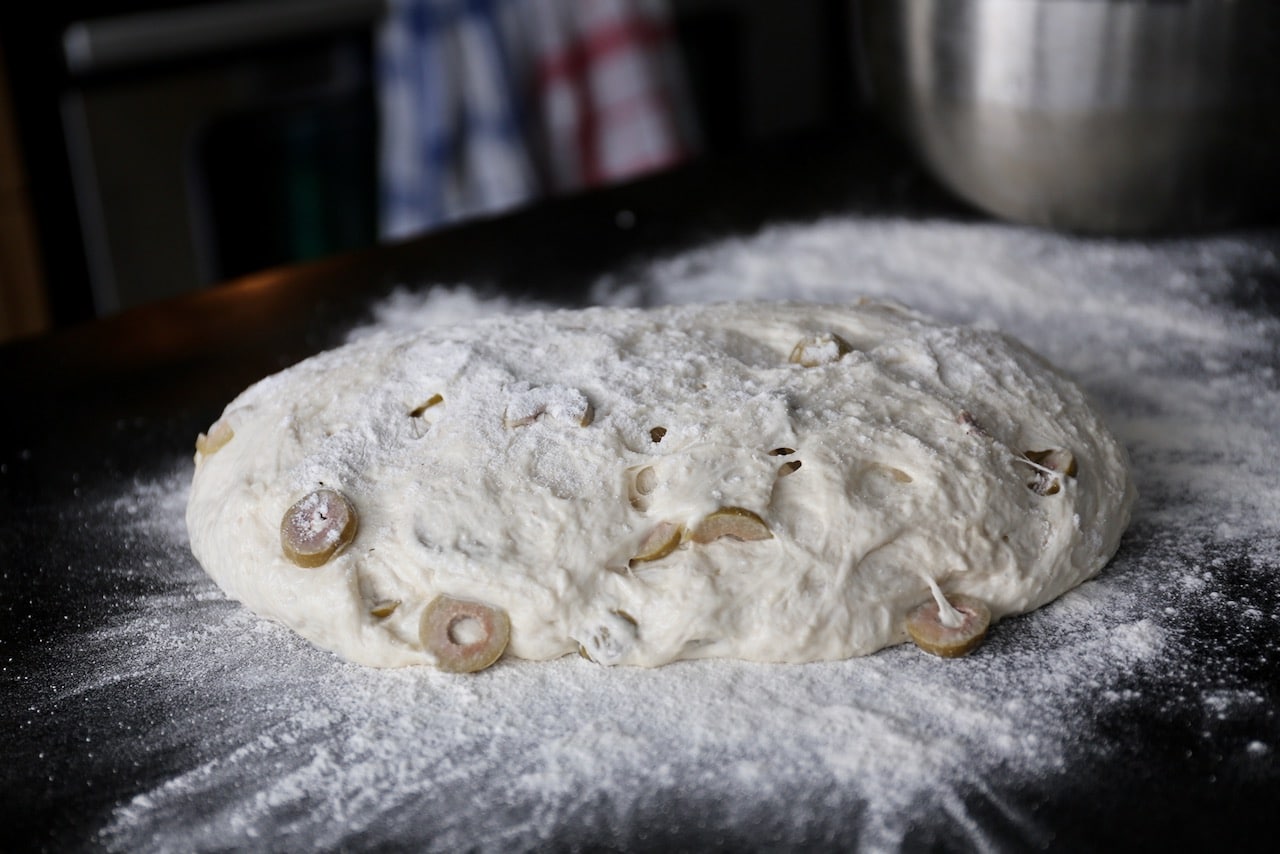
- Transfer the dough to a straight-sided vessel, if you have one, or leave it in the bowl if you don’t. Cover the vessel with a towel and let rise until doubled in volume. Punch down the dough — if your dough is still in the bowl, you can deflate it using wet hands right in the bowl; if your dough is in a straight-sided vessel, it may be easier to turn the dough out onto a work surface and ball it up using wet hands to prevent sticking. Return the dough to the vessel, cover it with an airtight lid, and transfer it to the refrigerator immediately for at least 12 hours. The dough can remain in the fridge for as long as 48 hours.
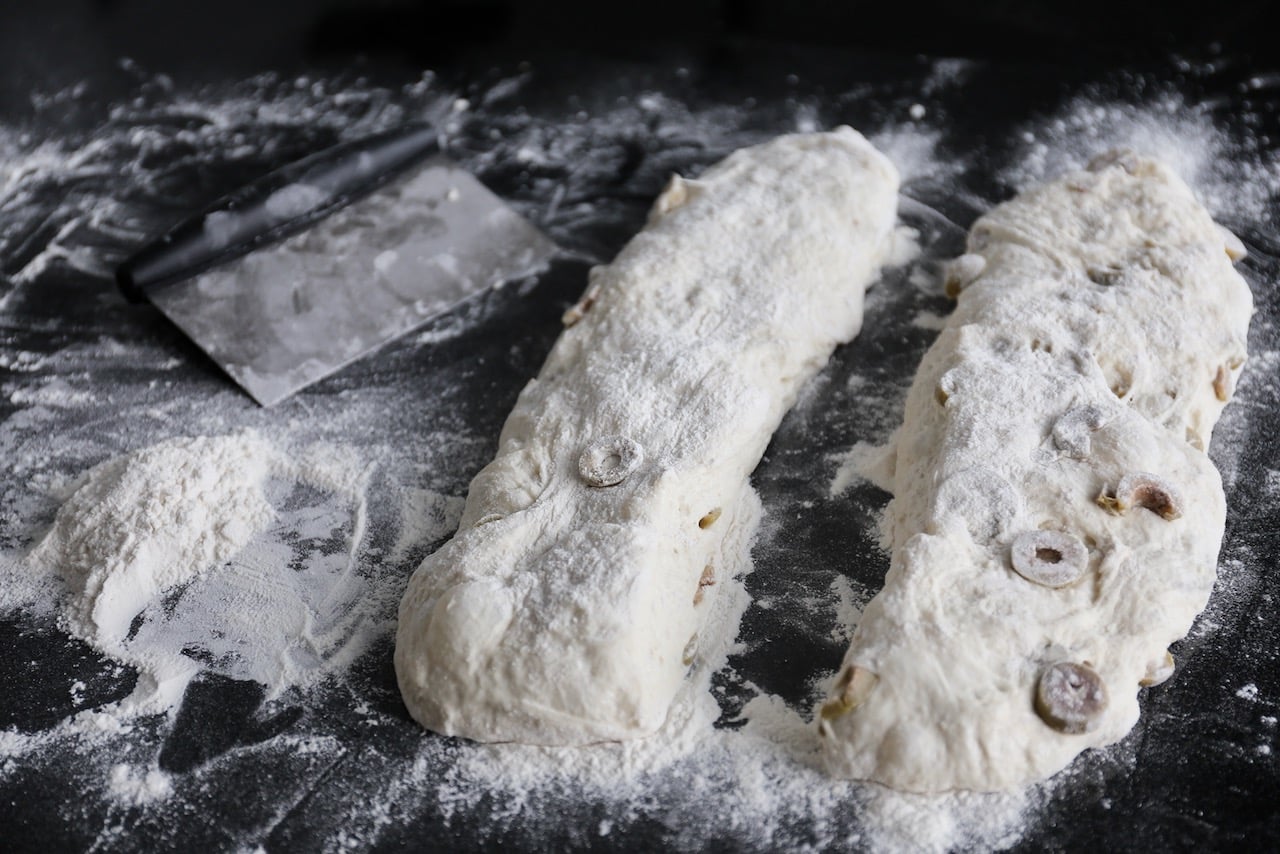
- Turn the dough out onto a lightly floured work surface. Sprinkle the top with flour as well. Gently stretch the dough to an 8" x 10" rectangle and cut it into two pieces, each 4" x 10".
- Transfer the loaves onto a piece of parchment coated with flour, leaving about 6" between them. Cover with a plastic lid or lightly greased piece of plastic wrap. Let rise until the loaves have expanded, and look puffy, about 1 to 2 hours depending on the temperature of your kitchen. The loaves are ready for the oven when an indent made with your fingertip stays visible for a few seconds and fills is very slowly; if it springs back, the loaves need more time.
- About 30 minutes before the loaves are ready to bake, preheat the oven to 500°F.
- Place an empty cast iron frying pan on the oven rack below the bread. If possible, adjust stone and pan so that the pan isn't directly under the bread, making it easier for steam to reach the baking bread.
- If you're using a pan, transfer the loaves on their parchment to a baking sheet, and place them on a middle rack of the oven. Lower the oven temperature to 425°F.
- Once you’ve placed the bread in the oven, pour about 1 cup of boiling water into the cast iron frying pan. Steam will billow from the pan upwards to envelop the baking bread; be sure to wear good oven mitts to shield your hands and arms. Quickly close the oven door to trap the steam.
- Bake the ciabatta until it's golden brown, approximately 22 to 25 minutes. Turn the oven off, place ciabatta on the oven's middle rack, crack the door open about 2", and allow ciabatta to cool completely in the turned-off oven.
Nutrition
Save this recipe to Pinterest!