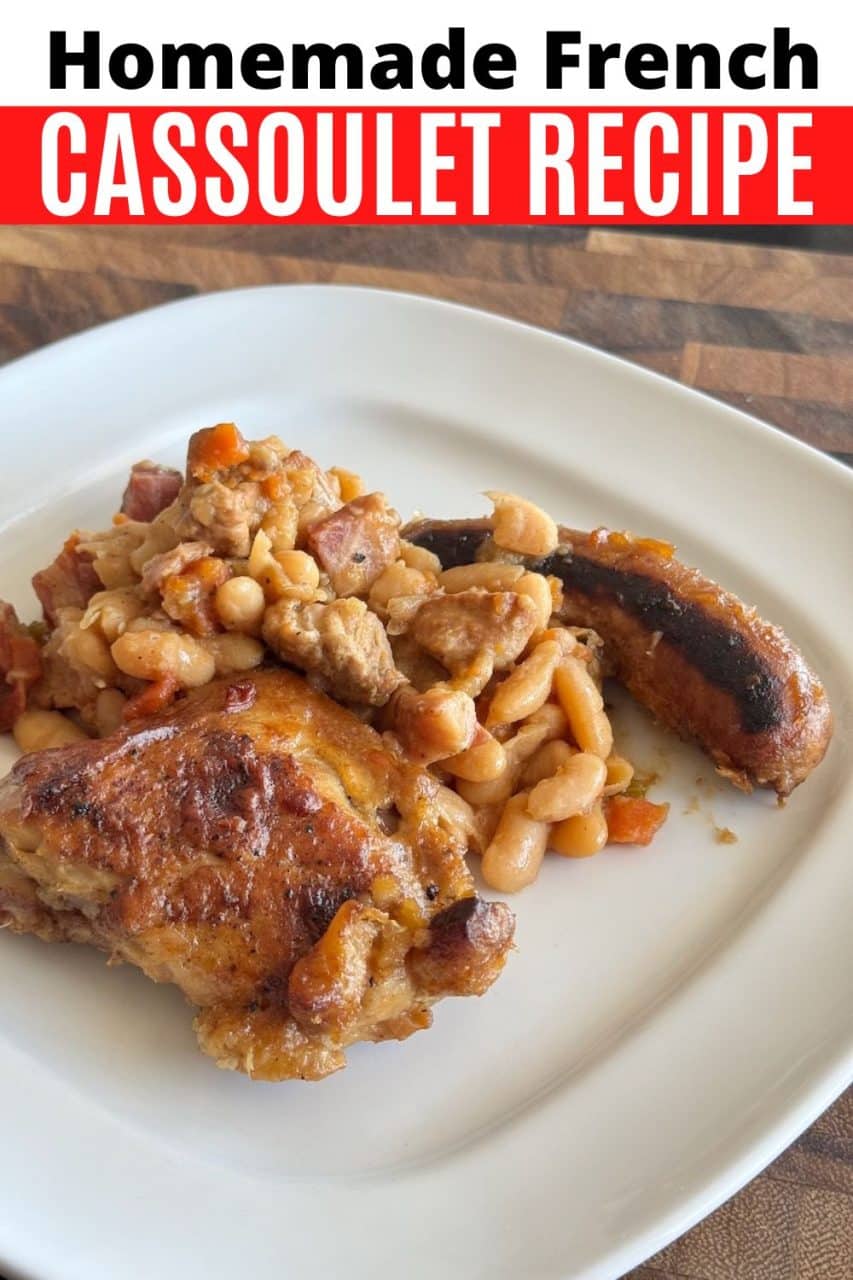
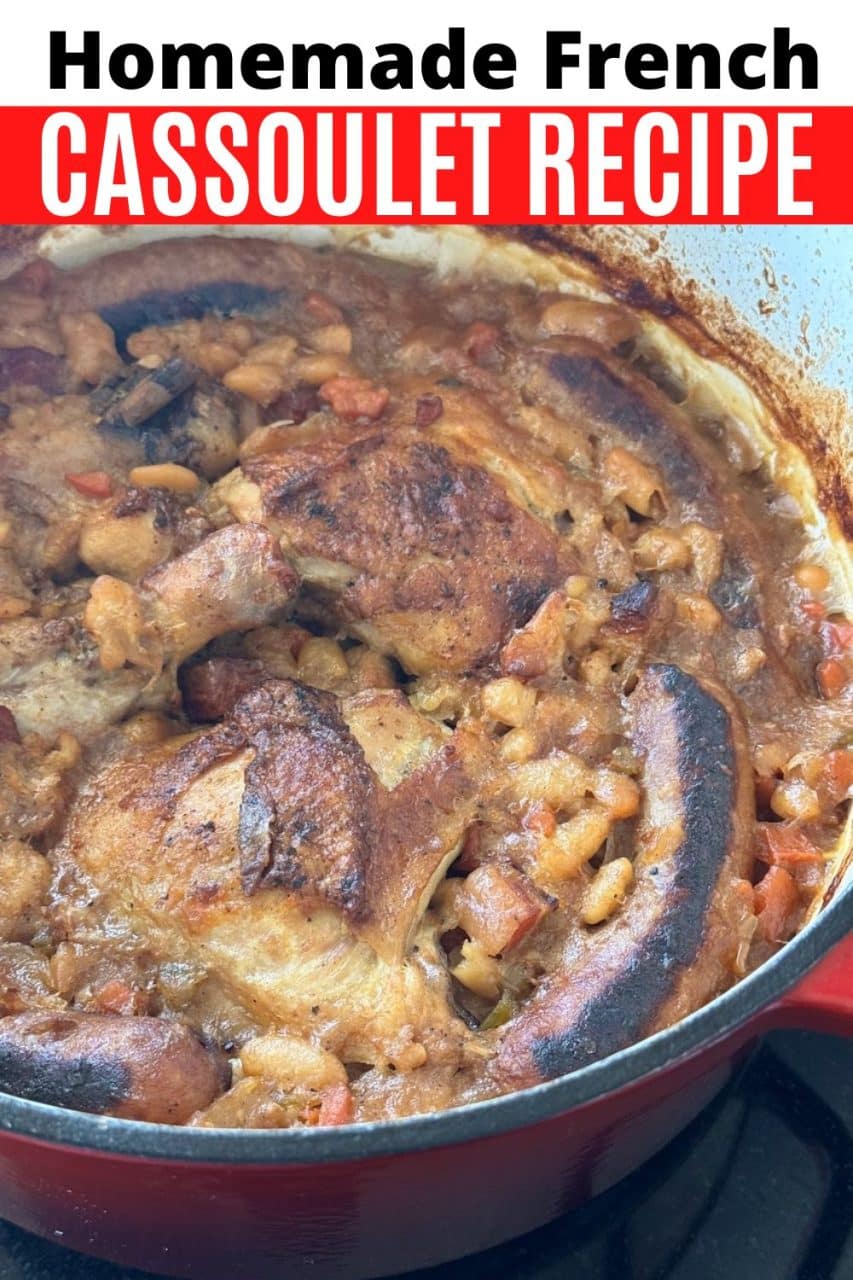
There are few French dishes as deeply comforting and soul-warming as a traditional Cassoulet.
Featuring tender slow-cooked beans, medley of meats, and layers of rich fatty flavour, this southwestern French classic is the kind of meal that rewards patience, and delivers unforgettable results.
Save this recipe to Pinterest!

What Is Cassoulet?
Cassoulet is a slow-cooked French bean casserole-stew originating from the Languedoc region.
Traditionally made with white beans, preserved meats, and sausages, it’s named after the “cassole,” the earthenware dish it’s baked in.
The dish is characterized by a deep, dark brown crust formed by baking, often over several hours, and is considered a hearty Autumn or Winter dish.
Over time, different regions in France have developed their own variations, but the heart of the dish remains the same: humble ingredients transformed into something deeply rich and satisfying.
It’s a prime example of peasant food perfected over hundreds of years!

Why You’ll Love Cassoulet
- Deep, layered flavour: Between the pork, sausage, poultry, and slow-simmered beans, every bite is rich and complex.
- Perfect for make-ahead meals: It actually tastes better the next day.
- Rustic and impressive: Ideal for entertaining without being fussy.
- Comfort food at its finest: Especially during colder months, this dish hits all the right notes.
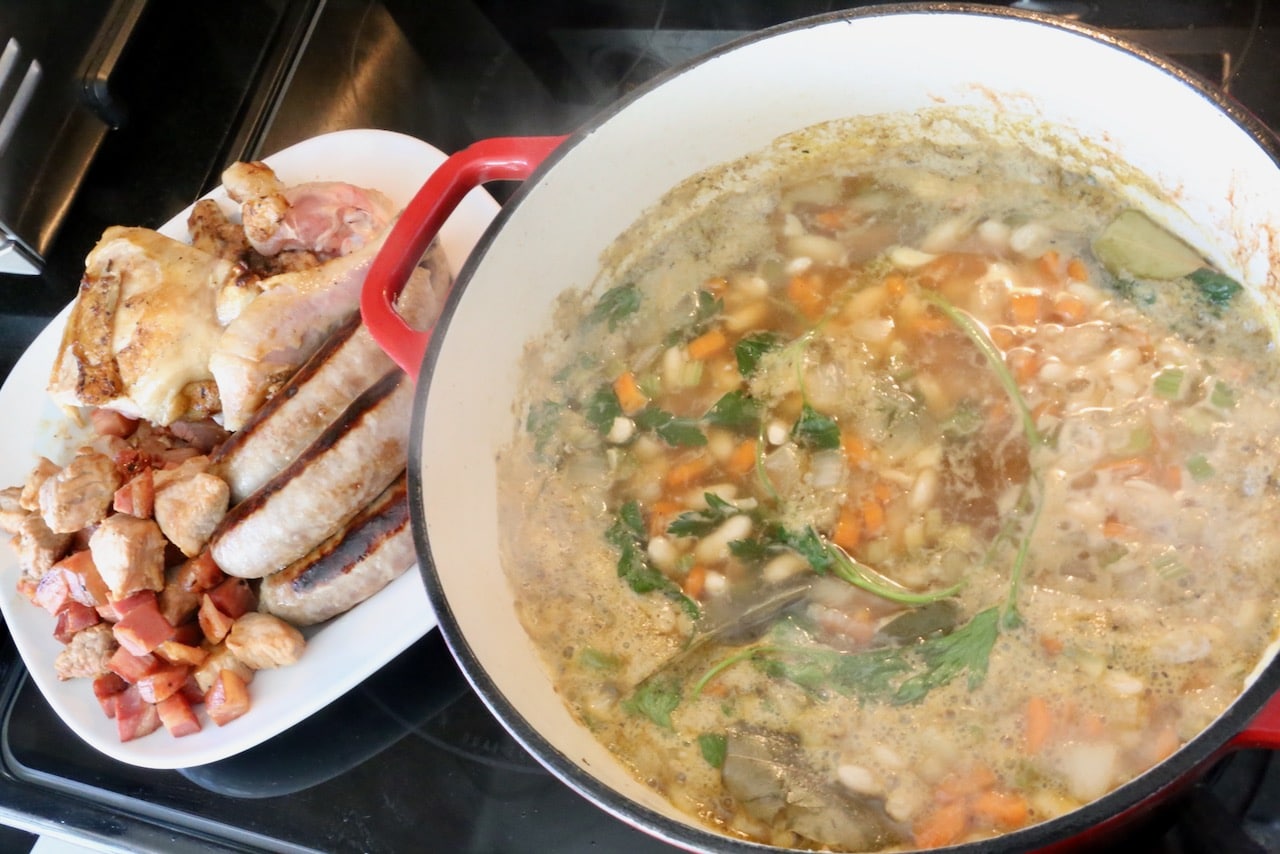
This French Stew Is A Medley of Meats
One of the defining characteristics of cassoulet is its combination of meats. Unlike many stews that rely on a single protein, cassoulet builds its depth of flavour by layering different cuts and types of meat, each contributing something unique.
Some add richness and fat, others bring structure and bite, and others infuse the dish with deeply savoury, slow-cooked intensity. The result is a stew that feels complex, balanced, and incredibly satisfying.
Cassoulet recipes vary depending on the region and what ingredients are available, which means there’s plenty of flexibility. You can mix and match based on preference, budget, or availability while still staying true to the spirit of the dish. Whether you go all-out with duck confit or keep it simple with chicken and pork, the key is combining a few different meats to create that signature layered flavour.
There are 4 main meat components you should include:
- Pork Sausage: typically Toulouse sausage, but bratwurst or other mild pork sausages work well. Adds seasoning and a juicy, tender texture.
- Fatty Pork: salt pork or pancetta provides essential richness and rendered fat that forms the flavour base of the dish.
- Pork Meat: pork hock or pork shoulder brings hearty, satisfying bites and deep pork flavour as it slowly tenderizes during cooking.
- Poultry: decadent duck confit is typically featured but chicken legs, pheasant or goose can also add another layer of complexity.

Recipe Tips for the Perfect Cassoulet
- Adjust liquid carefully: Beans should be just submerged, not soupy.
- Don’t rush the browning: Each layer of caramelization builds flavour.
- Use gelatin: If you’re using chicken stock from a carton add gelatin to mimic the richness of traditional stock made from bones. If you purchase stock from a butcher you can skip this step.
- Break the crust (but not too much): This helps thicken the dish while still developing that signature top layer.
- Let it rest: Like many stews, cassoulet improves after sitting, make it a day ahead if possible.
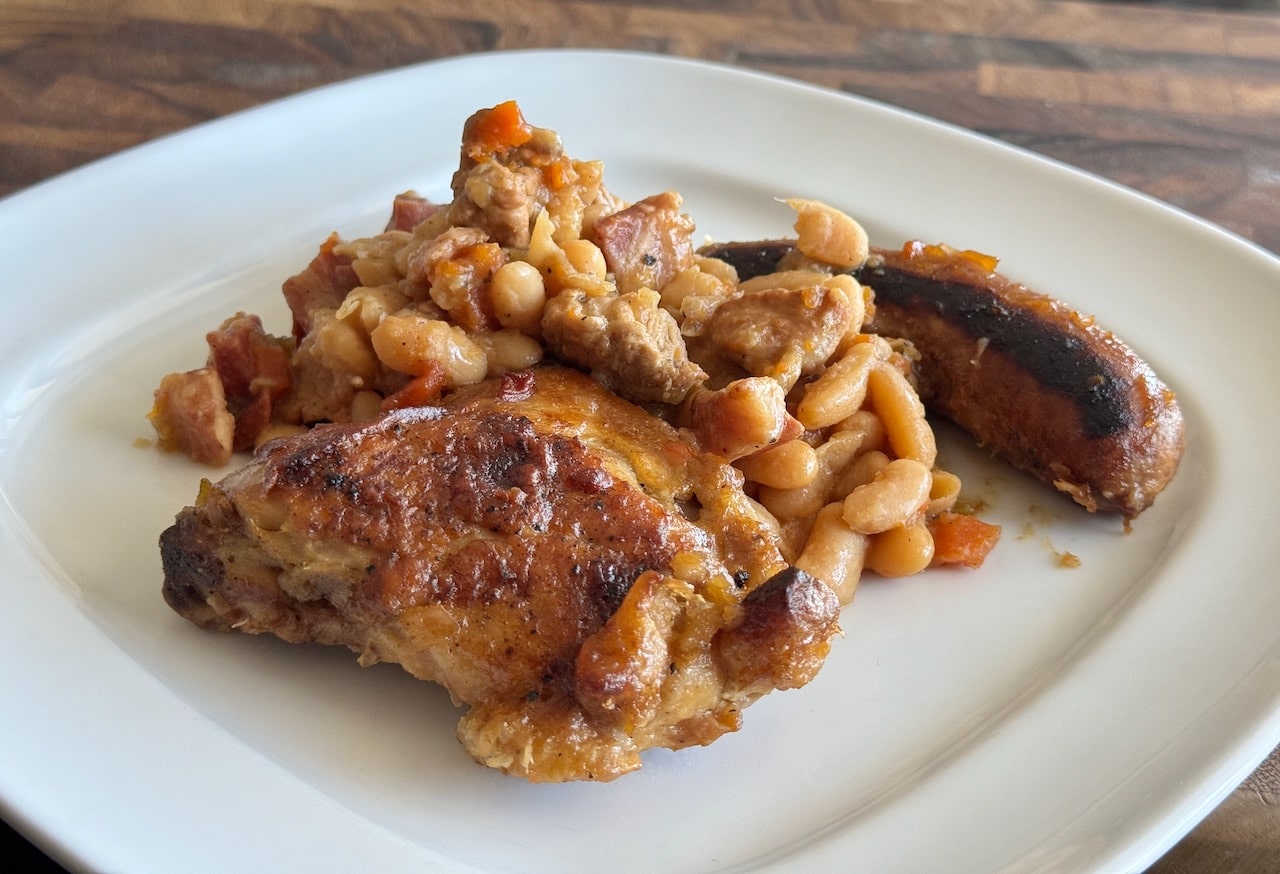
Serving Suggestions
Cassoulet is a fat and protein-packed hearty main, so keep sides simple:
- A freshly tossed green lettuce salad with acidic vinaigrette helps cut the richness
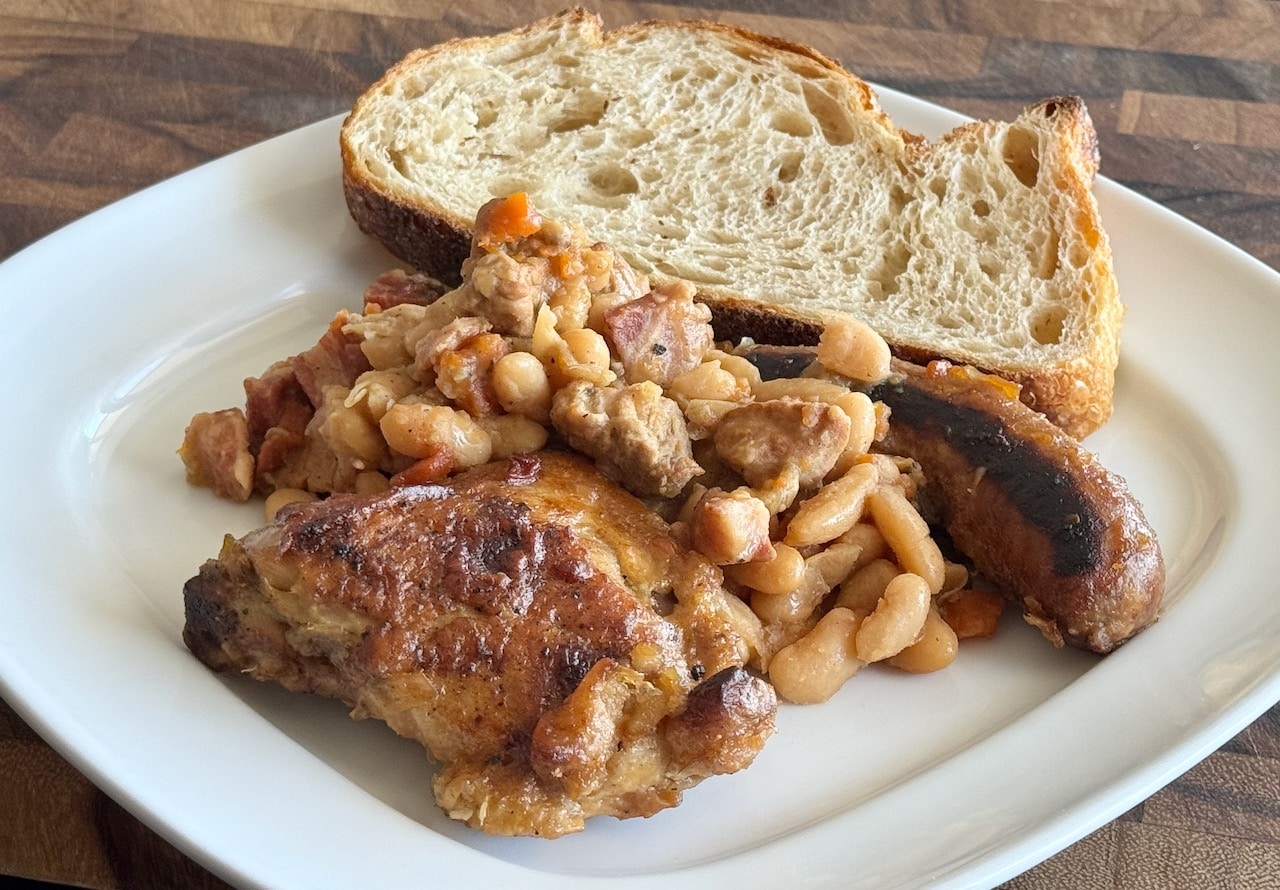
- Crusty bread for soaking up the sauce
- Lightly dressed bitter greens like arugula or endive
- A glass of dry red wine
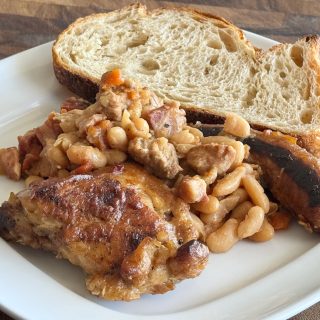
French Cassoulet
Equipment
- French knife
- measuring cups
- measuring spoons
- Dutch Oven
- tongs
Ingredients
- 454 g Dried Cannellini Beans
- 3 tbsp Kosher Salt
- 5 cups Chicken Stock divided
- 3 packets Unflavoured Gelatin
- 230 g Pancetta cut into 3/4 inch cubes
- 230 g Boneless Pork Shoulder cut into 1 inch cubes
- 2 Bone-in Skin-on Chicken Legs broken down into legs and thighs
- Black Pepper
- 454 g Toulouse Sausage (or pork sausage like bratwurst)
- 1 Large Onion finely chopped
- 2 Medium Carrots peeled, finely chopped
- 2 Celery Ribs finely sliced
- 6 Garlic Cloves minced
- 4 sprigs Parsley
- 2 Bay Leaves
Instructions
- In a large bowl, cover beans with 3 litres of water and add salt. Stir to combine, then let stand at room temperature overnight. Drain and rinse beans; set aside.
- Adjust oven rack to lower-middle position and preheat oven to 325°F.
- Place 4 cups of chicken stock in a large liquid measuring cup and sprinkle gelatin over top. Set aside.
- In a large Dutch oven, heat pancetta and pork shoulder and cook over high heat, stirring occasionally, until browned all over, about 9 minutes. Using a slotted spoon, transfer to a large bowl, leaving rendered fat in Dutch oven, and set aside.
- Season chicken with pepper and place skin side down in Dutch oven. Cook without moving until well-browned, 6 to 8 minutes. Transfer to a plate and let cool to room temperature.
- Add sausages to Dutch oven and cook, turning occasionally, until well-browned, about 2 minutes per side. Transfer to bowl with pork. Drain all but 2 tablespoons fat from pot.
- Add garlic, onion, celery and carrots to Dutch oven and cook, stirring and scraping up browned bits from bottom of pot, about 5 minutes. Add drained beans, parsley, bay leaves, and 4 cups of gelatin infused chicken stock. Bring to a simmer over high heat. Reduce to low, cover Dutch oven, and cook until beans are slightly softened but retain a bite, about 20 minutes.
- Using tongs remove parsley and bay leaves then discard. Add pork and sausages to pot and stir to incorporate. Beans should be almost submerged. Transfer to oven and cook, uncovered, adding remaining 1 cup stock halfway through by pouring it carefully down side of pot as necessary to keep beans covered, until a thin crust forms on top, about 1 hour 30 minutes.
- Break crust with a spoon and shake pot gently. Nestle chicken into the Dutch oven, skin side up. Return to oven and continue cooking, stopping to break and shake crust every 30 minutes, until crust is deep brown and thick, an additional 1 hour 30 minutes. Serve immediately with crusty bread.
Nutrition
Save this recipe to Pinterest!