I love traveling to Europe!
While I’ve previously explored the continent by car, bus, plane and train, I was was thrilled to finally have the opportunity to visit multiple countries on my first ever European river cruise!
I’ve been on a handful of cruises, from unique circumnavigation itineraries to Cuba and Newfoundland, to a more intimate river cruise on the Nile in Egypt.
In Spring, 2025 my family hopped on VIVA Cruises Iron Gates, which starts and ends in the scenic village of Passau in Germany. We spent 11 nights coasting along the Danube River, enjoying fun excursions by day while wining and dining at night.
If you’ve never been on a European river cruise read on to learn about my exceptional experience with Viva Cruises!
It’s a great way to enjoy a multi-generational family holiday. My sister and I are in our 40s and parents are in their 70s so for those with mobility issues it’s easy to get around and coast through Europe with ease!
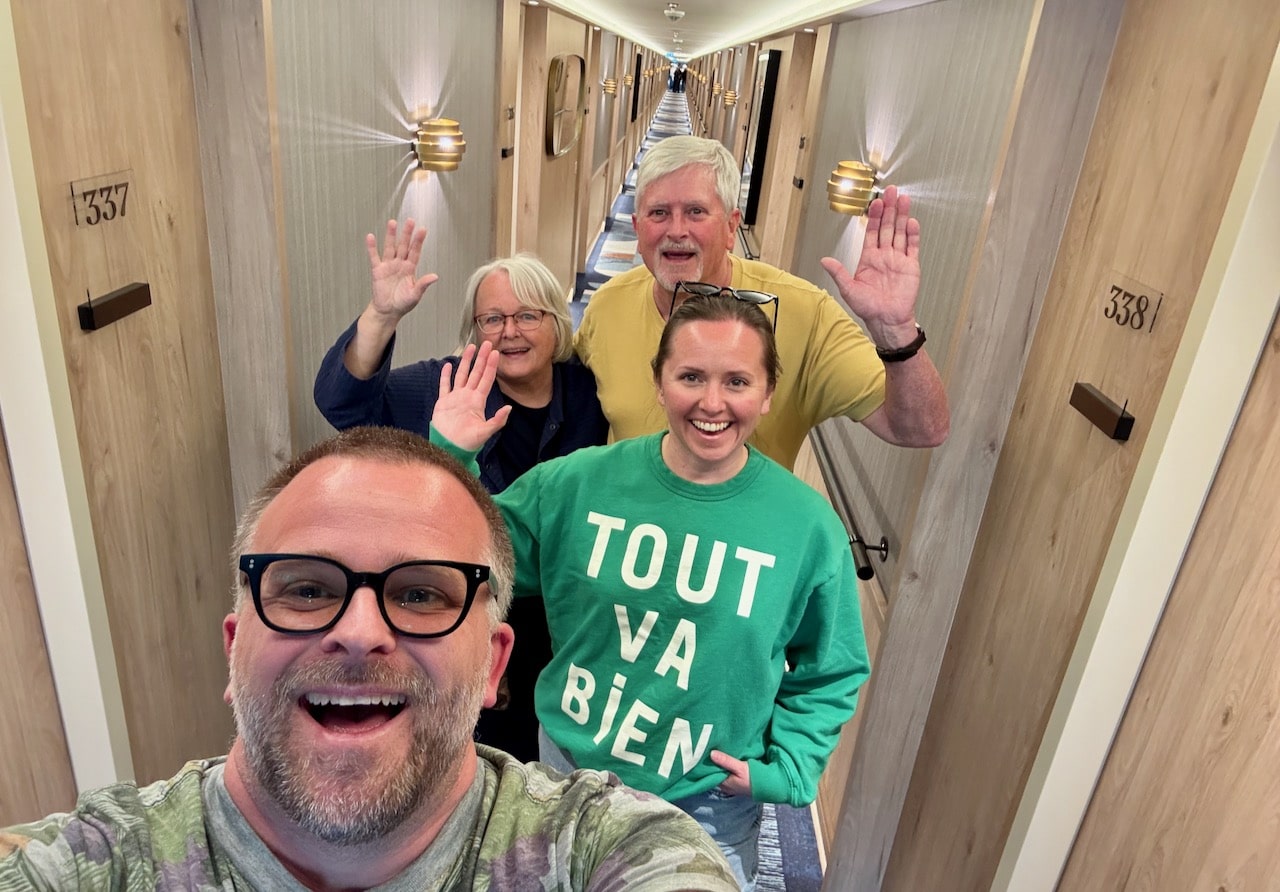
VIVA Cruises
VIVA Cruises, headquartered in Düsseldorf, was established in late 2018 as the in-house tour operator of the Swiss shipping company Scylla AG, which currently owns a fleet of 40 ships.
In March 2020, VIVA Cruises launched its first year-round vessel, VIVA TIARA. Subsequent milestones include the addition of the boutique-style VIVA ONE (2022) and VIVA TWO (2023). And most recently the VIVA ENJOY, which launched in 2025.
VIVA Cruises’ fleet of contemporary ships are designed to provide a boutique hotel experience on water. VIVA Cruises differentiates itself from its competition through several key features:
- Full Board Dining: an extensive breakfast buffet, lunch, and multi-course gourmet dinner menus served at flexible meal times with open seating.
- Beverages: a selection of high-quality non-alcoholic and alcoholic drinks available whenever you need to whet your whistle.
- In-Cabin Amenities: a well-stocked minibar, exclusive RITUALS beauty products, a Nespresso machine, and a welcome bottle of celebratory Prosecco.
- Sustainability: the company emphasizes environmental responsibility by incorporating modern technologies, such as solar panels, to reduce their ecological footprint.
- Additional Perks: free Wi-Fi access across the ship, free bike rentals, and gratuities are already included.
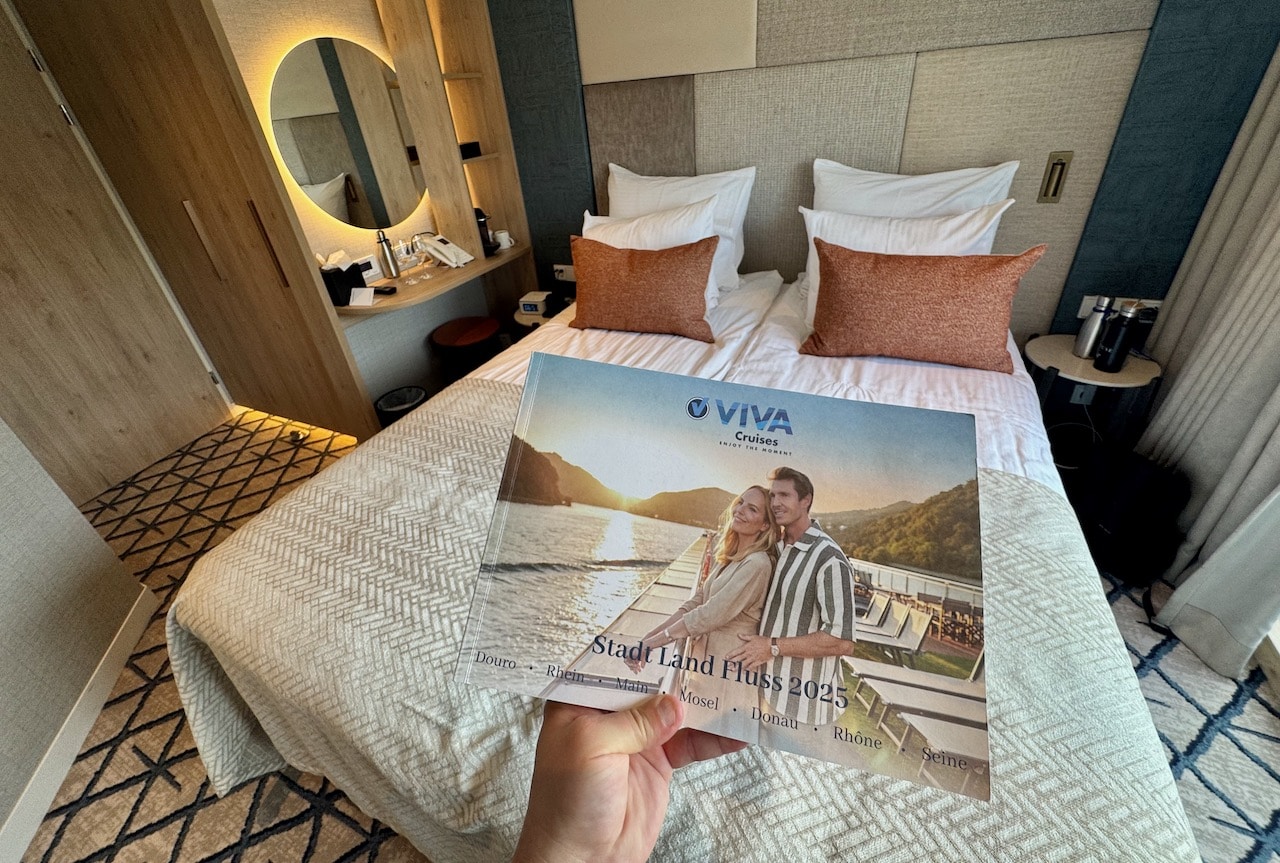
VIVA TWO
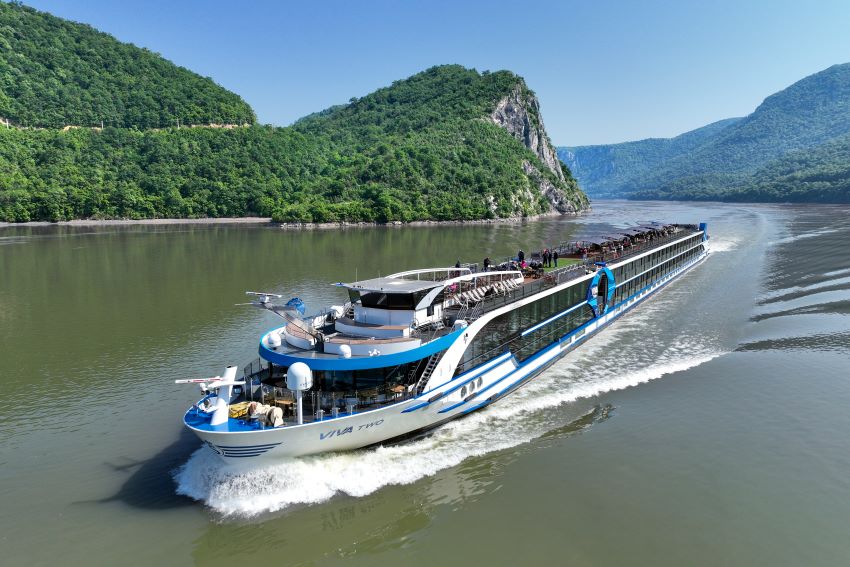
Our Iron Gates cruise sailed on VIVA TWO, a sleek 3-deck ship with a capacity for 190 passengers in 95 staterooms.
Skip inside one of the spacious suites on VIVA TWO and you’ll find scenic French balconies, adjustable air conditioning, flat screen TVs, hairdryer, safe, RITUALS bath products, shower, toilet, Nespresso machine and complimentary mini bar, which is refreshed daily.

The ship boasts several dining outlets: the signature Riverside restaurant, Italian cuisine at Moments, and VIVA Bistro, the onboard steakhouse.
Those looking to keep fit on holiday have access to a boutique fitness centre (with treadmill, bike, rowing machine and dumbbells), infrared sauna, steam bath, and relaxation zone. The breezy sundeck is outfitted with a choir of comfy loungers and hot tub.
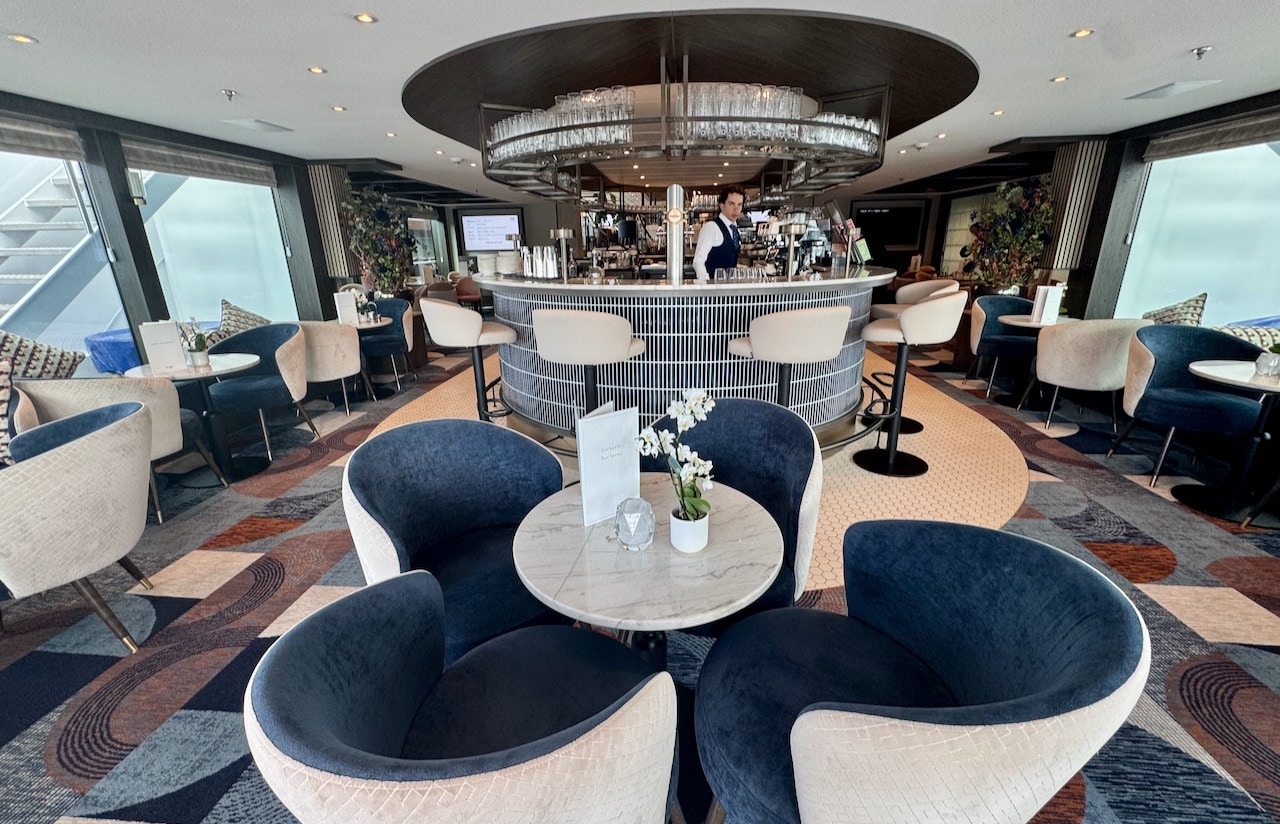
VIVA Cruises Dining
VIVA Cruises offers an upscale and varied culinary experience onboard that is ideal for well-heeled traveling foodies.
The all-inclusive concept includes a selection of high-quality non-alcoholic and alcoholic beverages available throughout the day. This encompasses mineral water, soft drinks, juices, various speciality coffees, tea, aperitifs, wines, beers, cocktails, spirits, and liqueurs.
Dining is casual so you can select what restaurant you’d like to eat at lunch or dinner. Daily menus are typically published in the morning for guests to review. To indulge in VIVA Bistro and Moments dinner service, reservations are required as the dining rooms are more intimate.
Once per trip guests can enjoy High Tea, when a selection of sweet and savoury treats such as scones, sandwiches, cupcakes, chocolates and macarons are served with a variety of teas.
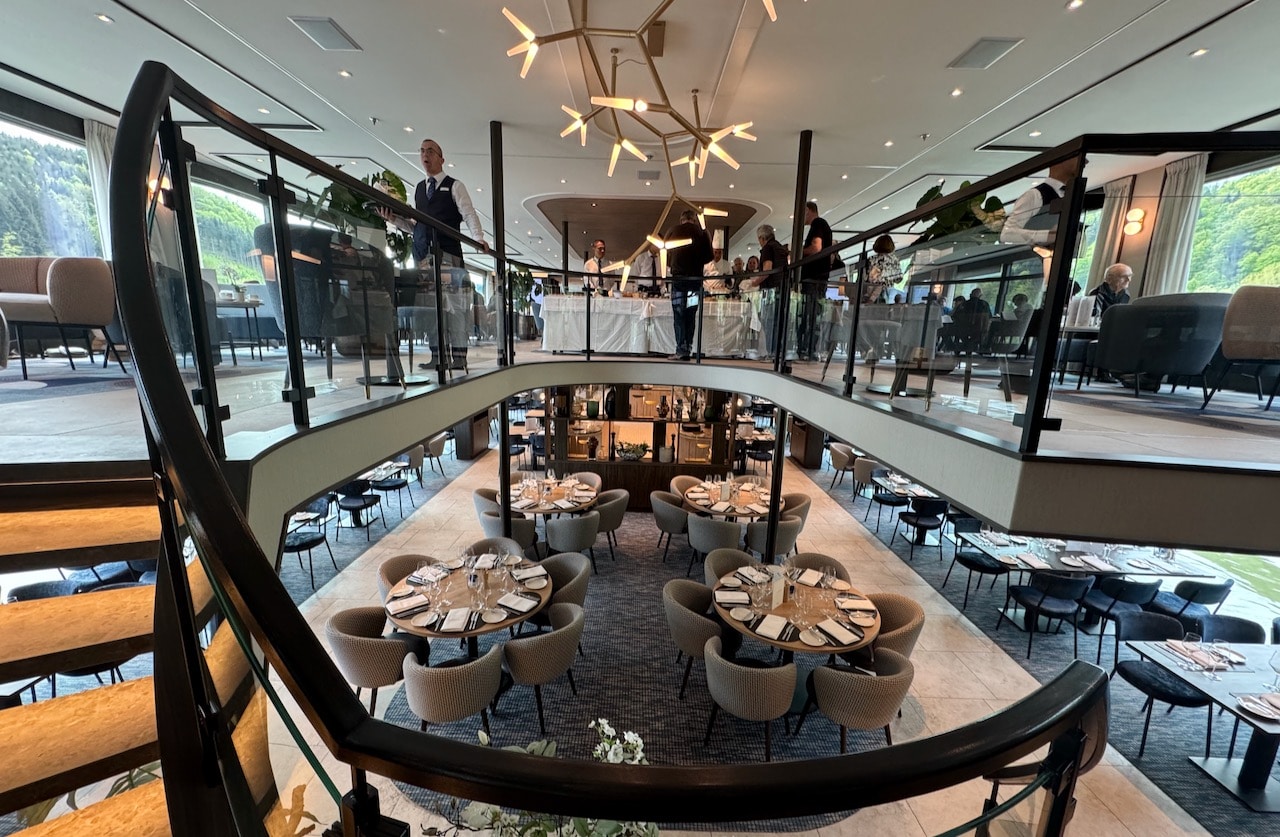
Riverside Restaurant
Riverside the main dining venue on the VIVA TWO, serves breakfast, lunch and dinner. The restaurant is located in the centre of the ship, boasting floor to ceiling windows so guests can enjoy great views as the boat sails down the Danube.
It’s here you’ll find international gourmet cuisine as well as regional dishes that reflect where you’re currently traveling.
At breakfast guests have an option of grazing over a buffet or ordering a la carte to satisfy their cravings each morning. The buffet features fresh juices (plus prosecco for mimosas), charcuterie, cheese, smoked fish, salads, yogurt, fruit, cereals, plus a pastry and bread station. The a la carte breakfast menu features brunch favourites like pancakes, waffles, omelet and eggs benedict.
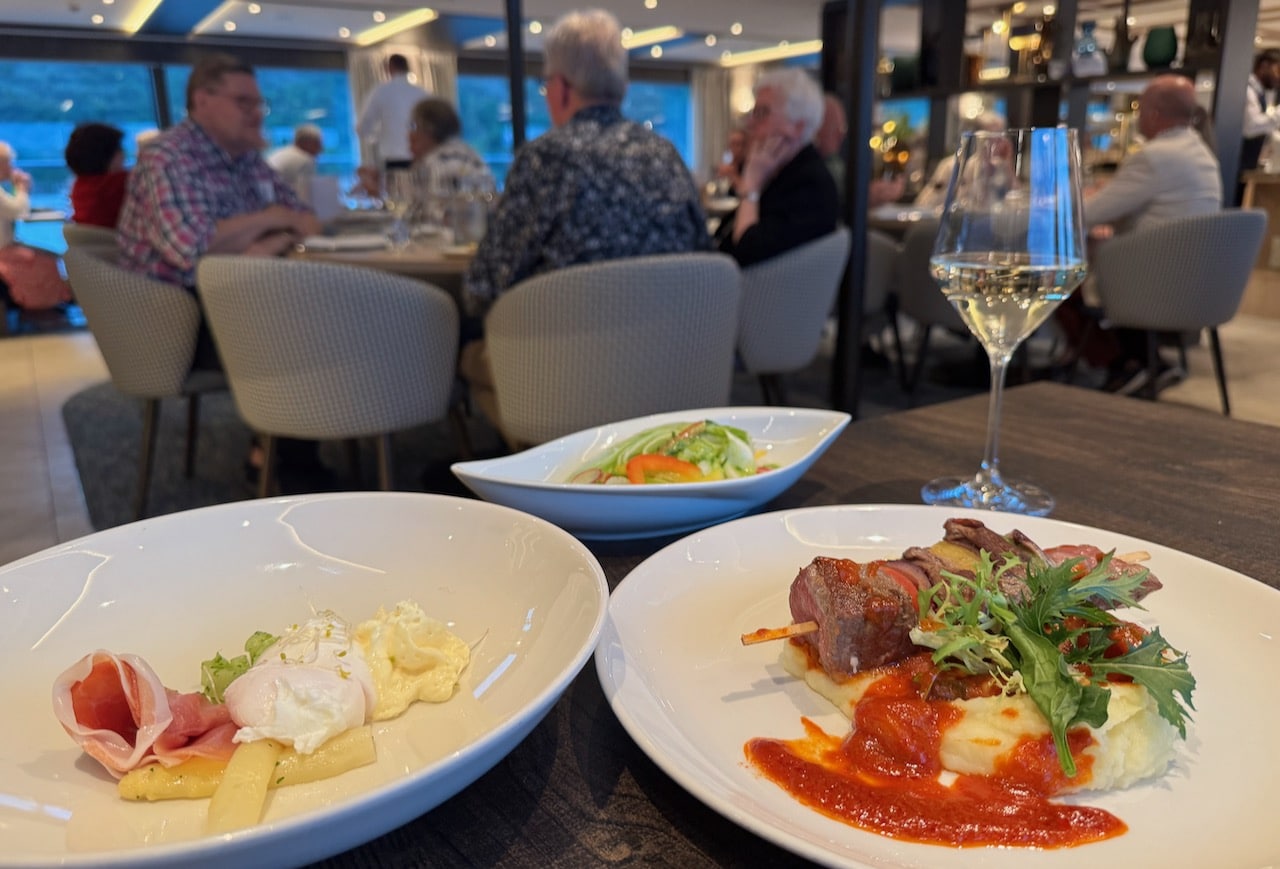
Dinner is a flashy affair, as dapper waiters serve multi-course gourmet menus that consist of five dishes. The menu is imaginative and includes a daily featured regional dish, reflecting the country you are visiting that day.
We enjoyed several regional specialities at Riverside Restaurant during our Iron Gates Cruise along the Danube River. Highlights included a German beef stew with spätzle and bacon, Serbian Cevapcici sausages, Austrian Schnitzel, Hungarian ____
I was delighted that VIVA Cruises emphasizes the importance of serving regional culinary specialties on their menus. This approach allows guests to experience the unique culinary traditions of the destinations they visit.

Moments
The menu at Moments showcases the flavours of Italy. The restaurant is located on the first floor of the ship at the stern, next door to the gym and spa.
During the lunch hour Moments serves up a a variety of pizzas, lasagna and creamy pasta served out of a parmesan wheel. The a la carte menu is complimented by a salad and antipasto buffet.
During dinner Italian a la carte menu highlights included Branzino, Grilled Lamb with Mascarpone Polenta, Gnocchi with Beef and Truffle Parmesan Cream, Tagliatelle Primavera, Risotto with Mushrooms and Sun-dried Tomatoes, and Involtini of Eggplant stuffed with ricotta and spinach.
Viva’s Bistro
Viva’s Bistro is the ship’s steakhouse concept, located on the 3rd floor at the stern. The intimate dining room sits perched over the back of the boat so you can enjoy watching the Swiss flag waving over the churn of the propeller.
On a sunny day enjoy sitting on the Bistro’s outdoor patio, which features a handful of tables and chairs, or sit inside in the elegant dining room.
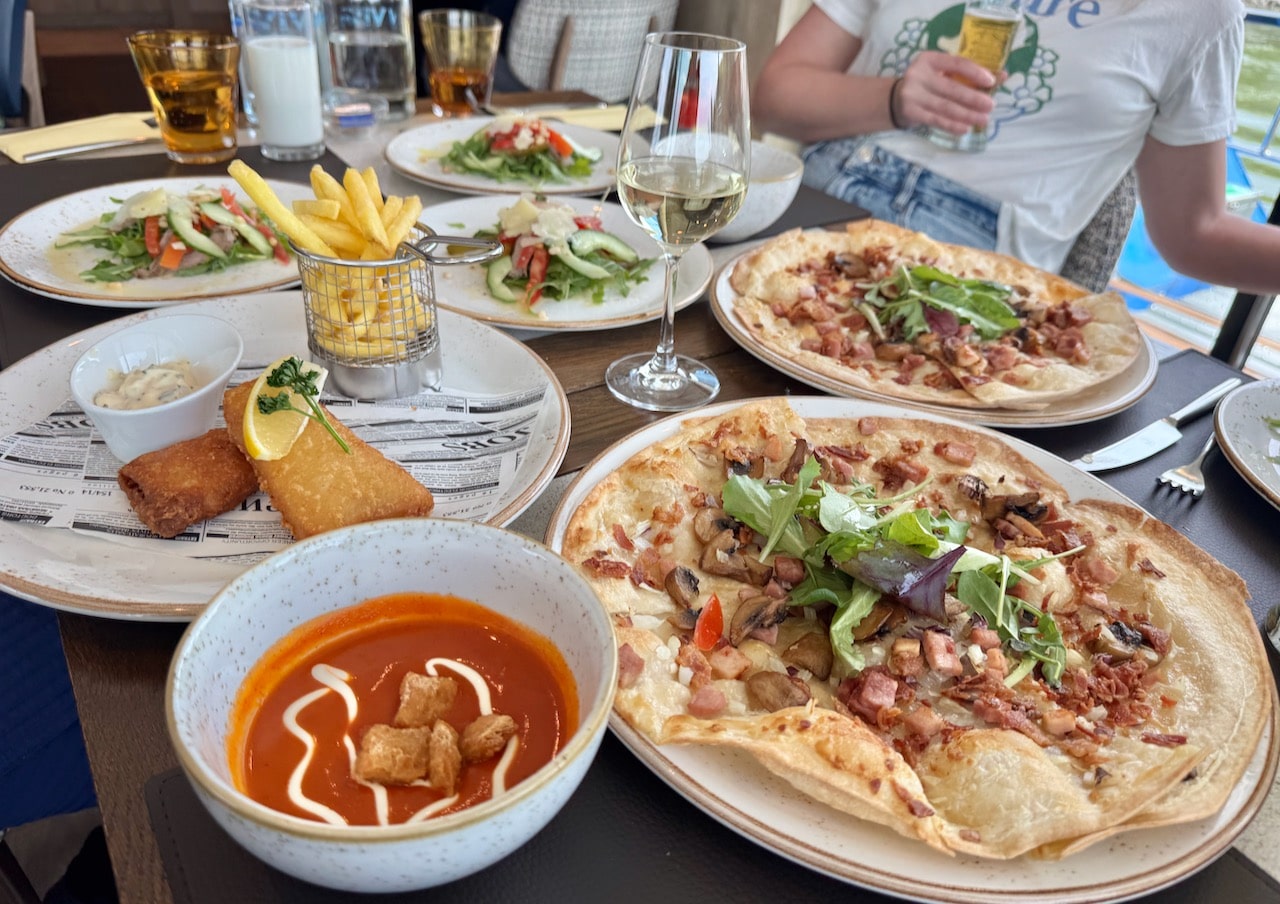
At lunch the Bistro serves a selection of casual fare like Spanish Beef Salad, Creamy Roasted Tomato Soup, Fish & Chips and German Flammekueche.
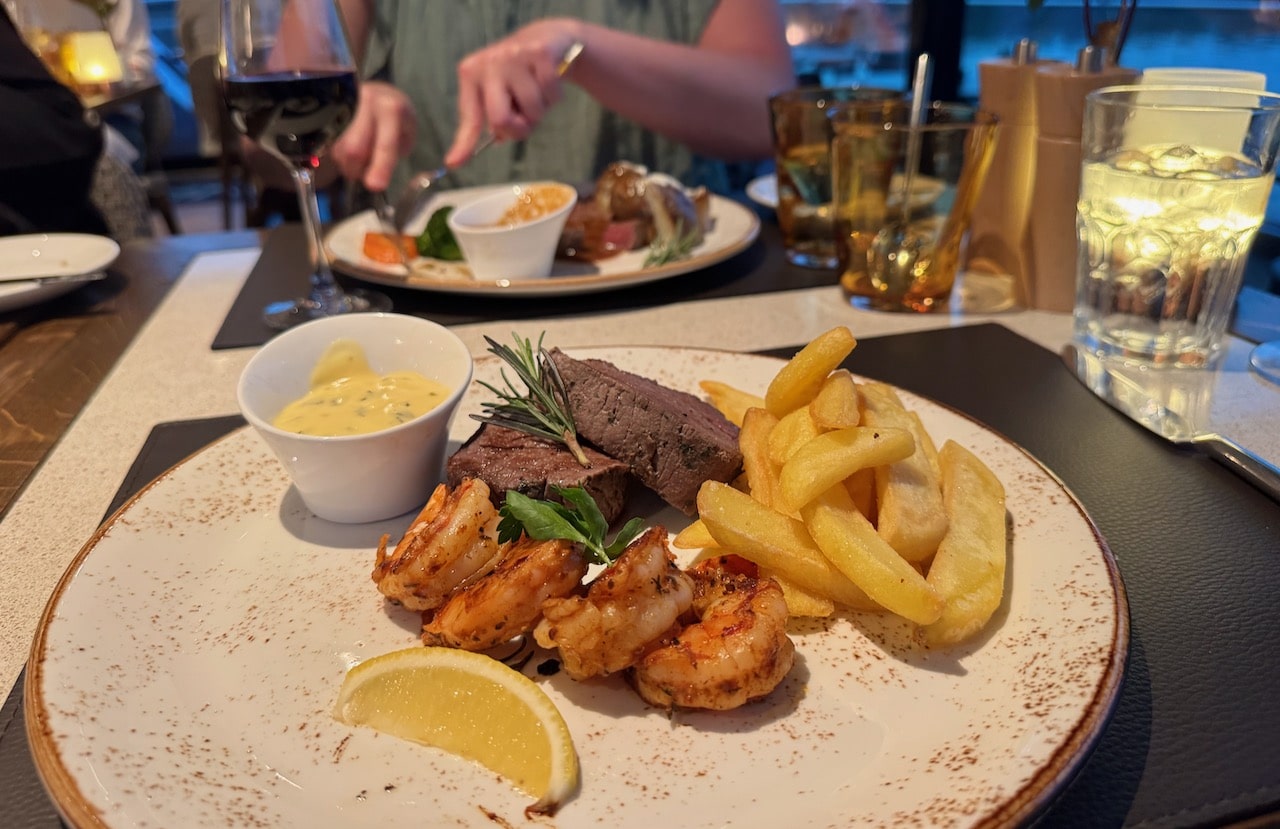
At dinner enjoy watching the sunset while forking through pretty plates of Garlic Butter Grilled Prawns, Beef Tenderloin slathered in bearnaise, Smoked Salmon Tartatre, Lobster Bisque, and Bread Pudding Bananas Foster.
Iron Gates Excursion Highlights
The Iron Gates is a gorge on the river Danube. It forms part of the boundary between Serbia and Romania.
In the broad sense it encompasses a route of 134 km; in the narrow sense it only encompasses the last barrier on this route, just beyond the Romanian city of Orșova, that contains two hydroelectric dams, with two power stations, Iron Gate I Hydroelectric Power Station and Iron Gate II Hydroelectric Power Station.
Archaeologists have named the Iron Gates mesolithic culture (dated circa 13,000 to 5,000 years ago) after the gorge. One of the most important archaeological sites in Serbia and Europe is Lepenski Vir, the oldest planned settlement in Europe, located on the banks of the Danube in the Iron Gate gorge.
Each night at 6:30pm the cruise manager offers a review of the next days destination with a slide show in the lounge as waitstaff serve wine, cocktails and canapés.
It’s at these daily talks you’ll learn about the history of the next destination, must-see attractions and the outline of the excursion itinerary. Some guests chose to explore the destination on their own, simply hopping off the boat and exploring on foot. Others pay for the daily excursion that includes a professional guide, transportation, and attraction tickets. Tours are offered in German and English.
Here’s a detailed overview of the excursions for each port of call, including details on the key sites visited on the VIVA Cruises Iron Gates itinerary.
If you are traveling with someone that has mobility issues, you can assess the level of difficulty by reviewing the excursion details in the trip itinerary notes. The intensity of each excursion is clearly marked, including whether there are long flights of stairs involved.
Passau, Germany
After spending a week luxury hotel hopping in Munich I hopped on a train with my family to arrive in the postcard-perfect town of Passau.
Passau is located on the Austrian border, perched over the confluence of the Danube, Inn and Ilz rivers. Known as the Three Rivers City, it’s overlooked by the Veste Oberhaus, a 13th-century hilltop fortress housing a city museum and observation tower. The old town below is known for its baroque architecture, including St. Stephen’s Cathedral, featuring distinctive onion-domed towers and an organ with 17,974 pipes.
The cruise starts and ends in Passau so if you can find free time give yourself a few hours to explore the city before or after your cruise.
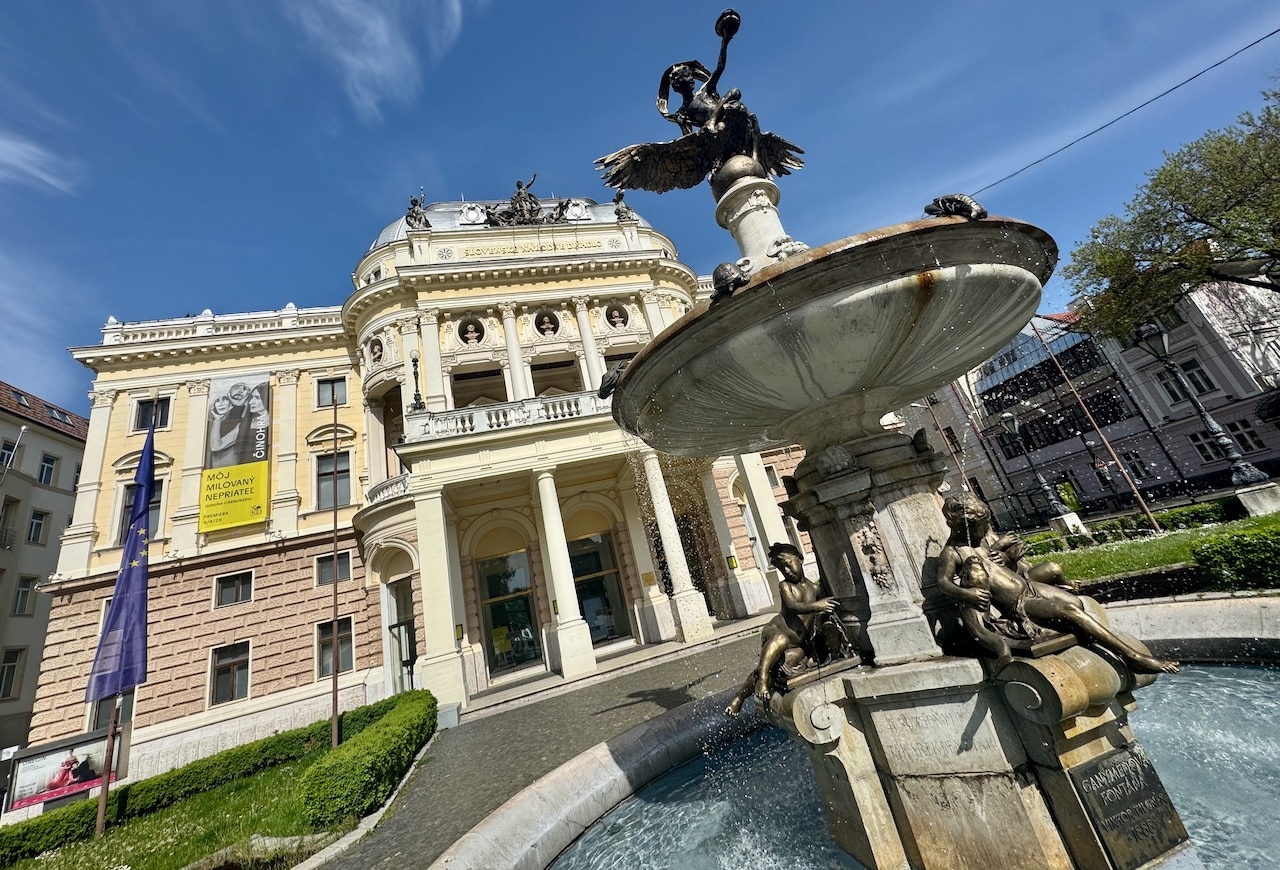
Bratislava, Slovakia
Bratislava, the capital of Slovakia, is famous for its medieval architecture, the Danube River straddled by a series of bridges, and its rich cultural history.
Located a short drive from Vienna, it’s popular with day-trippers as the cost of restaurants, shopping and attractions is significantly cheaper than in Austria.
We joined on a 2.5 hour guided walking tour of Bratislava’s Old Town and castle. Our friendly guide helped explain historical landmarks, the country’s unique political history and made stops so we could sample local poppy seed stuffed pastries and honey wine.
Aljmas, Croatia
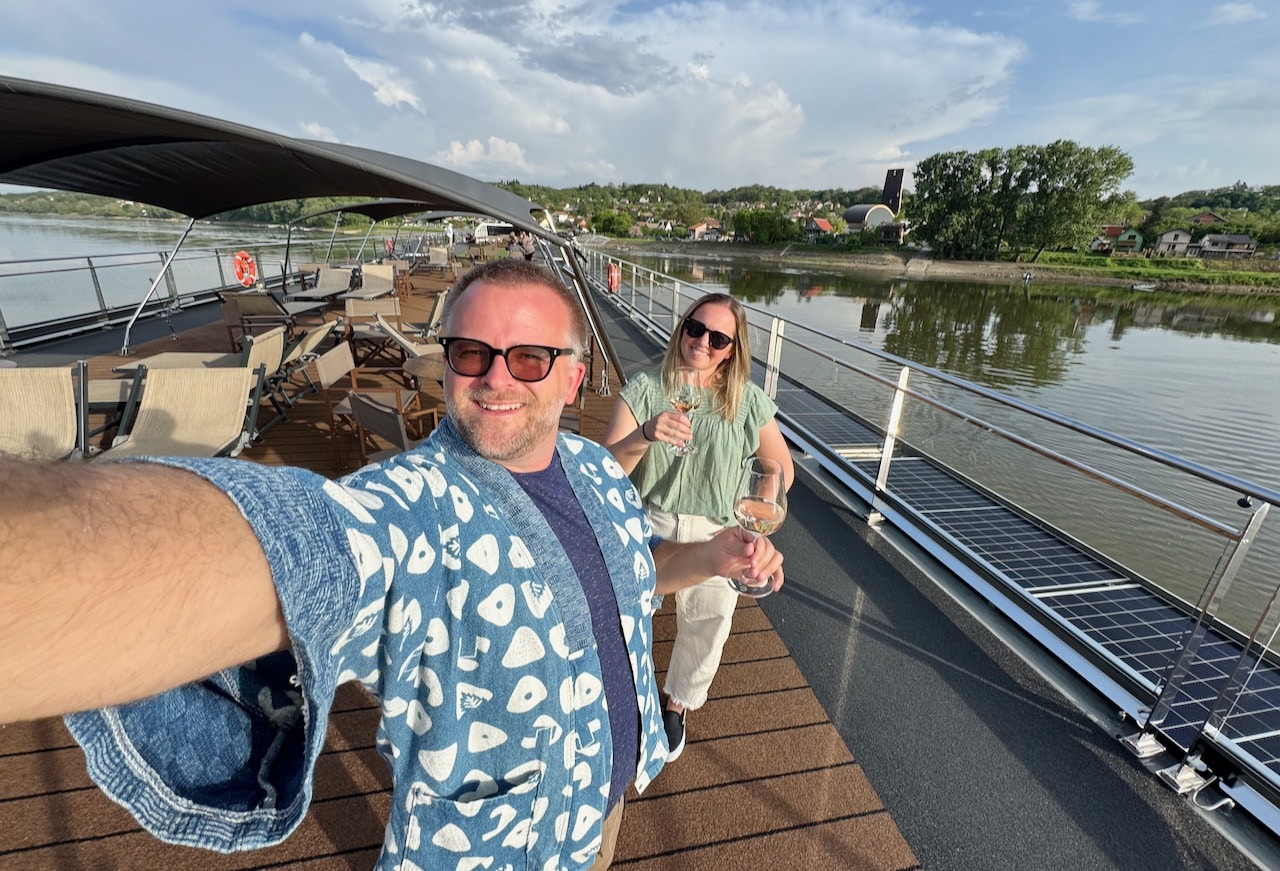
This is the only day on the cruise where you don’t get off the boat, so cross your fingers and hope for good weather. We lucked out with a blue sky sunny day. Most guests spent the morning and afternoon sitting on lounge chairs sipping champagne, reading books and watching the pretty landscape sail by.
Aljmaš is a small fishing village on the Danube River, known for its unique church and role as a pilgrimage site.
The quick stop here is made for customs purposes only so guests remain on board. Enjoy the 360 degree views of the town from the top deck while sipping a glass of rose!

Belgrade, Serbia
Our guide picked us up at the cruise terminal, and after a short bus ride we arrived at St. Sava Cathedral, one of the largest Orthodox churches in the world.
After snapping some photos we had the opportunity to explore the impressive crypt, which creates a unique atmosphere with its intricate frescoes and iconic paintings. The dome, in Neo-Byzantine style, spans a massive area of 4,500 square meters and is famous for its mosaics.
Unfortunately the weather didn’t cooperate in the morning and the city experienced torrential rain. We got dropped off at the ship and dried off over lunch then were happy to see the sun come out in the afternoon so used our free time to explore the city on our own.
We walked by the city’s most important sights: the equestrian statue of Prince Miloš Obrenović, National Museum, National Theatre, Republic Square, National Assembly and the must-see Fortress, which offers beautiful views overlooking the city and Danube below as well as scenic Kalemegdan Park.

Donji Milanovac, Serbia
After hopping off the ship in Donji Milanovac we got on a bus that took us to the archaeological site Lepenski Vir, a famous historic site that dates back to the New Stone Age. The oldest artifacts date back to 7000 B.C.
We enjoyed a short stroll to the site where we had the opportunity to stretch our legs. Upon arrival we watched a film that offered details on the archaeological research being done at the site as well as discoveries that have been made on the history of the ancient settlement and its excavations.
After visiting the settlement, the bus drove us to Golubac, where we visited a jaw-dropping fortress, ranked as one of Serbia’s most visited attractions.
The fortress is a photographers dream so we had lots of fun snapping photos of the exterior and interior of the massive fortified castle. There’s a small museum located inside as well.
Once back on the ship make sure to head to the roof when the boat departs as you can get great photos of the fortress from up top.
Novi Sad, Serbia
Serbia’s second largest city, Novi Sad, is renowned for being the liberal city of music, art and fun. Set on an idyllic stretch of the Danube River, locals love the city’s urban mural art, vibrant music scene and plethora of architecture including Baroque, Neo-Renaissance, and Bauhaus buildings.
We met our guide on a bus and enjoyed a short drive outside of the city to a rural region surrounded by rolling hills, dotted with orchards and vineyards.
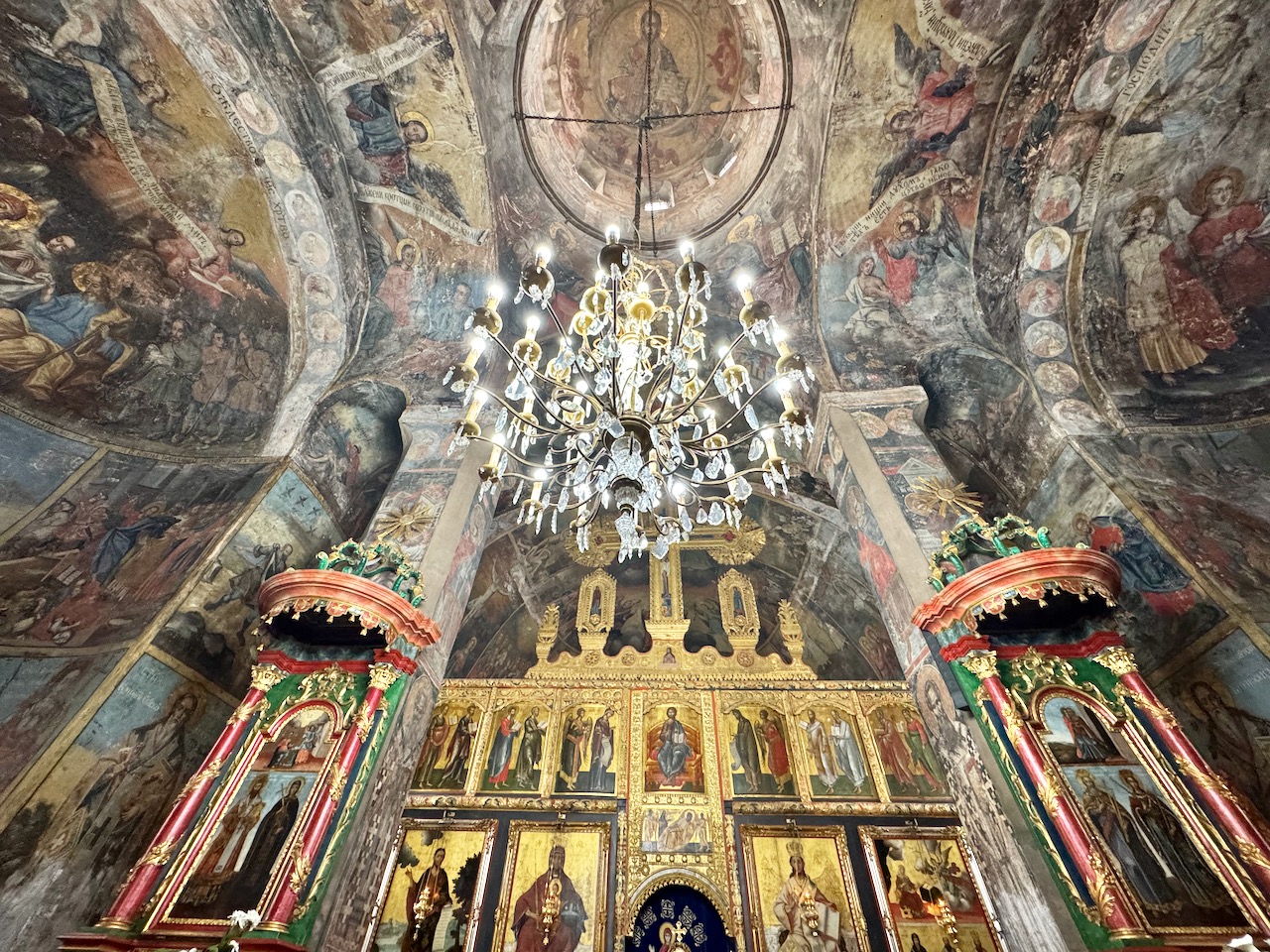
We spent an hour visiting the ancient Krusedol Monastery, famous for its murals and icons before driving to Novi Sad’s Old Town for a walking tour. Once in the city we visited a restaurant with a cute outdoor beer garden to sip a local lager then explored the town square and main shopping street to learn about its history.

Kalocsa, Hungary
The quaint Hungarian town is surrounded by 8,000 acres of farmland, which is famous for growing the iconic red peppers used to prepare Hungary’s signature spice, paprika.
The excursion goes directly from the ship to the puszta by bus. Upon arrival, all guests are welcomed with brandy, lard bread with red onions and wine.
In Bakodpuszta you have the opportunity to get acquainted with animals like gray cattle and woolly pigs. Then you’ll watch a fun horse show where local cowboys ride elegant elegance carriages and you’ll see the famous “Puszta Tens” when one rider controls ten horses. One of the world’s most unique equestrian performances. During the carriage ride into the puszta, marvel at the fauna and flora of Kalocsa sarköz.
After visiting the stables, the ride to Kalocsa is a short 11km away. The picturesque town on the eastern bank of the Danube is a centre of Hungarian folk art. In the House of Folk Art you can discover textiles featuring typical Hungarian motifs. In the disused railroad station you can also find many murals.
Budapest, Hungary
Hungary’s eye-catching capital is famously split between two city’s across the Danube River: Buda and Pest. The twin city’s, which make up a cultural metropolis are famous for their architecture, museums and thermal baths.
Budapest is the longest stop on the itinerary, as the boat arrives at 8am and departs at midnight. This extended stay allows guests to enjoy an organized excursion with plenty of free time to visit art galleries, museums, a traditional spa or simply wander the streets to go window shopping.
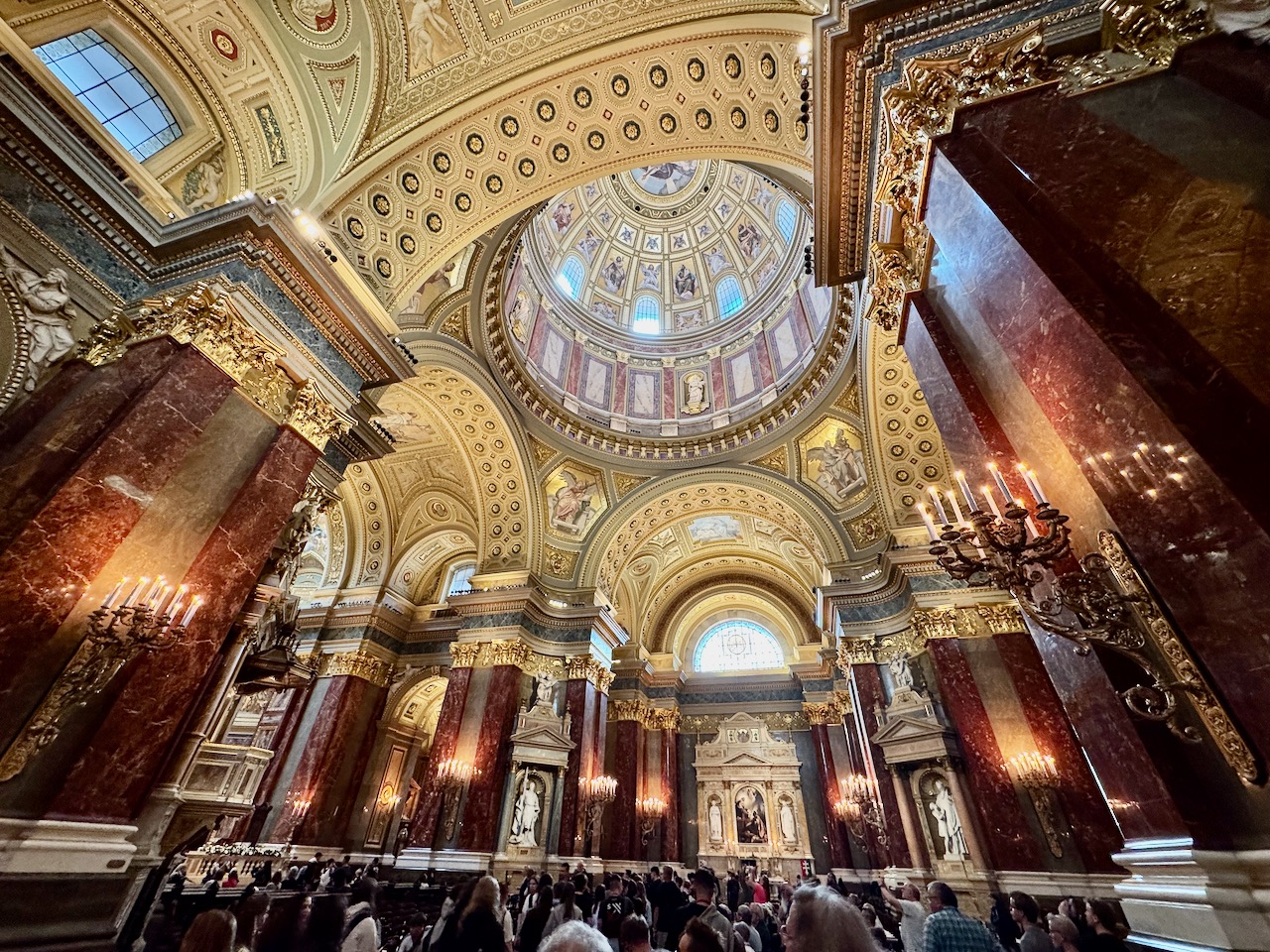
The tour begins on the vibrant Pest side, where a comfortable bus whisks you away to the magnificent St. Stephen’s Basilica. Stroll through its stunning interior and soak in the history and beauty.
Next, we drove along to the majestic Heroes’ Square, glide down the elegant Andrássy Avenue past the State Opera, and navigate through the bustling city centre and Grand Boulevard.
The panoramic tour on the picturesque Buda side offers breathtaking views from the comfort of your seat. Marvel at the grandeur of the Gellért Hotel and historic Castle District. Capture the perfect photo opposite the Parliament and enjoy the scenic drive along the Pest quay, with a stunning panorama of the historic Buda Castle.
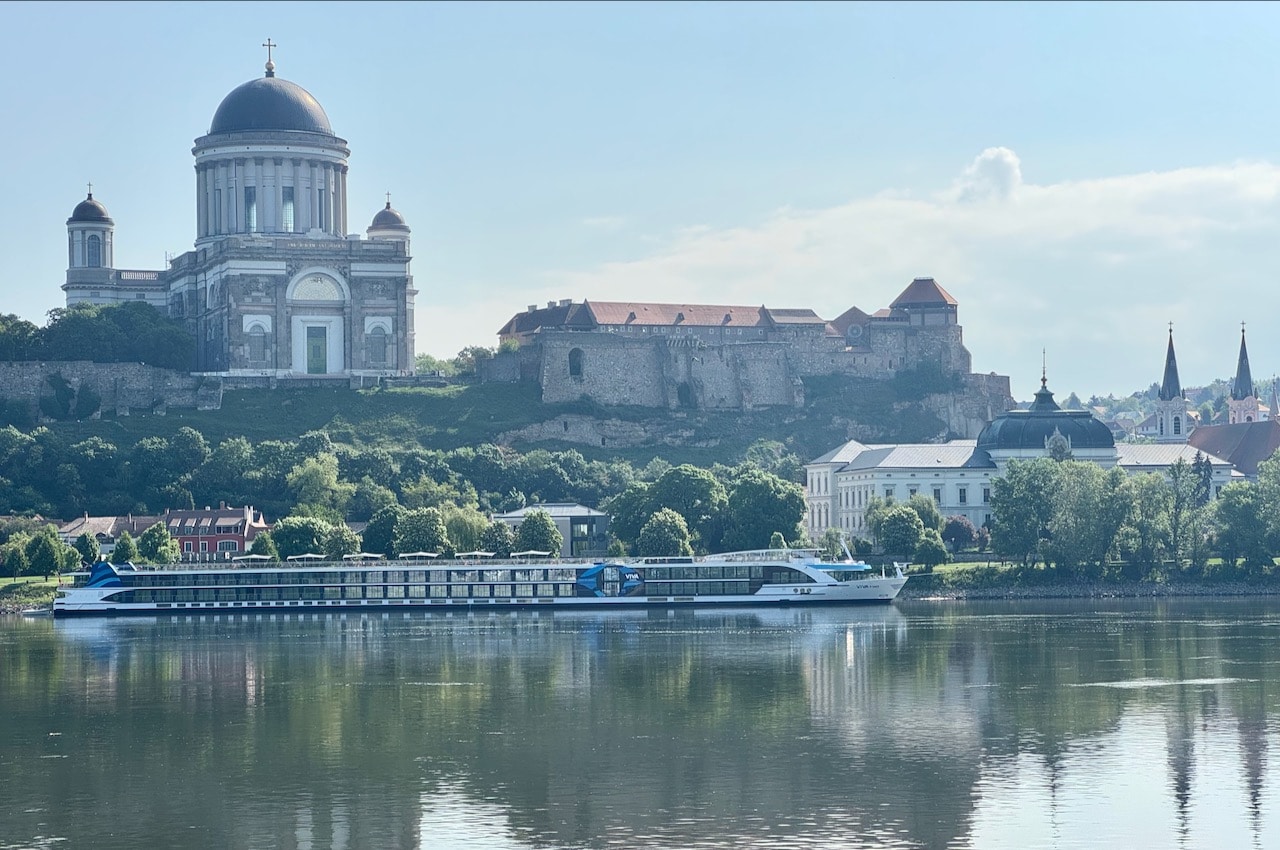
Esztergom, Hungary
We began our tour of Esztergom by hopping on a little train right at the dock, which took us on a scenic ride to the imposing basilica. Once the capital of the Kingdom of Hungary and the seat of Hungarian kings, Esztergom is considered the spiritual centre of the country. The city plays a central role in the history of Christianity in Hungary, as it was here that the first Hungarian king, Stephen I, was crowned.
The Esztergom Basilica, a masterpiece of Classicism and the largest church in Hungary, will captivate you with its impressive architecture. During the guided tour, you will learn about the construction history and significance of this sacred place.
After the tour of the basilica, we had the opportunity to enjoy magnificent panoramic views over the Danube and the surrounding landscape before the little train took us back to the ship.
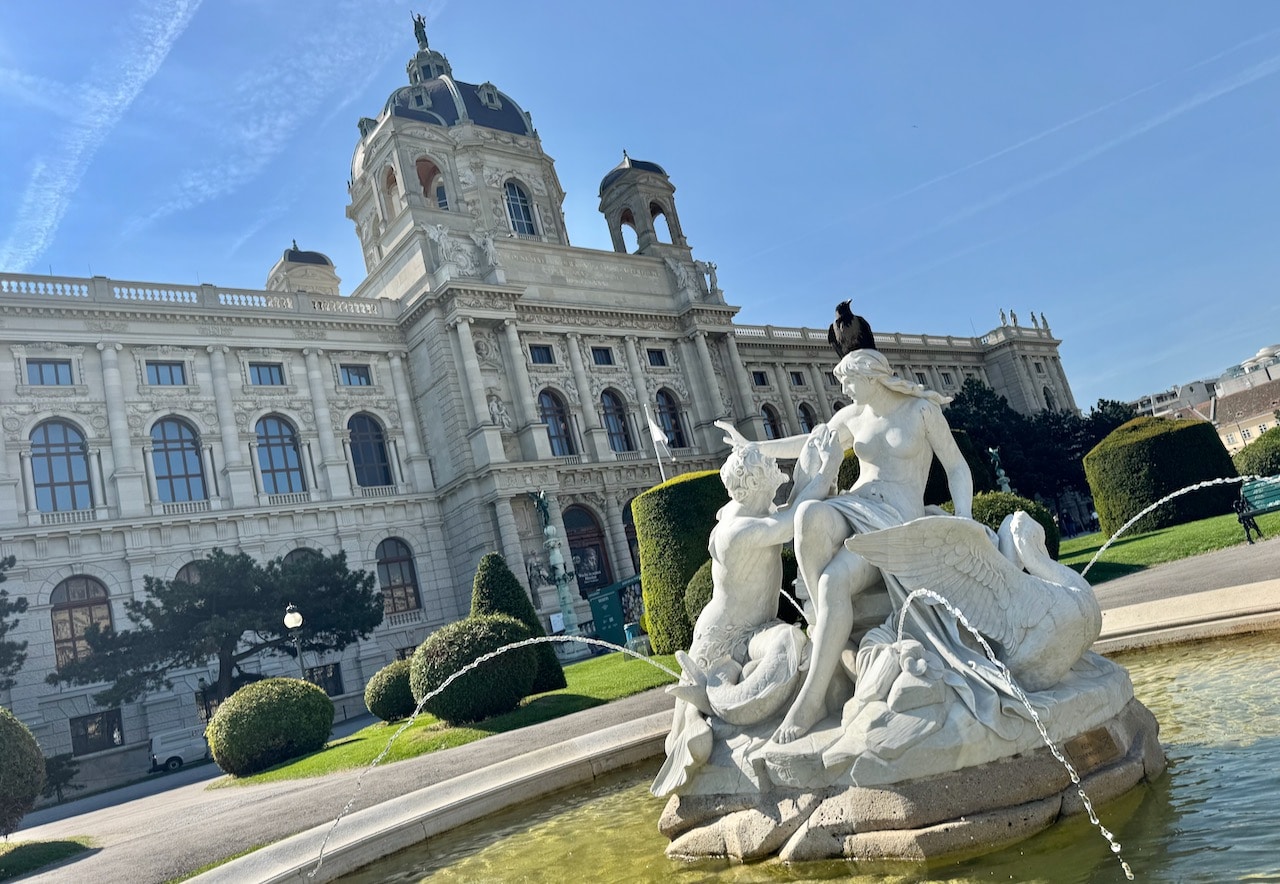
Vienna, Austria
The stop in Vienna is unique as you can enjoy both excursions if you chose: a morning city tour and afternoon palace visit.
In the morning discover the the capital of Austria on a guided walking tour. First, you’ll drive via the Urania to Schwarzenberg- and Karlsplatz, past the Musikvereinssaal to the State Opera. Afterwards you will take a leisurely walk from the famous Hofburg.
At St. Stephen’s Cathedral you will have some free time to visit the cathedral from the inside and visit a typical Viennese coffee house. Afterwards, stroll through the famous Kärntner Strasse back to the bus. Now the tour continues along the Ringstrasse, passing magnificent buildings rich in tradition such as the Parliament, the City Hall and the Burgtheater.
Spend the aternoon visiting one of Europe’s most impressive palaces. Experience the impressive art and architectural history of Vienna with a guided visit to the Upper Belvedere, one of the city’s most significant Baroque palaces. This complex, which once served as a summer residence for Prince Eugene of Savoy, is now home to one of Austria’s most important art collections.
Upon arrival, you’ll have the opportunity to explore the splendid rooms of the Upper Belvedere. Admire the impressive architecture of the palace and the beautiful gardens that create a harmonious connection between art and nature. The Upper Belvedere houses masterpieces by artists such as Gustav Klimt, Egon Schiele, and Oskar Kokoschka.

Melk, Austria
Dürnstein is a small town on the Danube river in Lower Austria. It is one of the most-visited tourist destinations in the Wachau region, a well-known wine growing area.
Two excursions are available on the last day of the cruise: a cycle tour through the Wachau Valley or visit to the Melk Abbey Baroque World Heritage Site. Since I was traveling with my parents who are seniors we opted for the latter as it’s more accessible for those with mobility issues.
The imposing Baroque structure of Melk Abbey, built in the early 18th century, towers majestically over the town and attracts thousands of visitors from around the world each year. This impressive building is not only a masterpiece of Baroque architecture but also an important center of European cultural heritage.
The journey begins at the abbey, where you will be guided through the Prelate’s Courtyard, a magnificent courtyard that vividly reflects the Baroque splendor of the monastery. The tour continues through the former Imperial Apartments, now museum rooms, offering a fascinating glimpse into the history of the abbey and its imperial guests.
Another highlight is the grand Marble Hall, as well as the Altane, a terrace from which you can enjoy a breathtaking view over the Danube Valley. The crowning moment of your tour, however, is the world-famous Abbey Library, home to over 80,000 volumes. The stunning ceiling fresco by artist Paul Troger leaves visitors in awe, conveying the intellectual grandeur and significance of this place.
The final stop is the splendid Abbey Church, another Baroque masterpiece that impresses with its rich ornamentation and spiritual aura. Conclude your visit by skipping through the Abbey’s well-manicured gardens.

Your travelogue of our Danube river cruise is fantastic. The pictures and dialogue brought back great memories.